
Canopy science 3: Hot off the press!
Welcome to Canopy Science, our mini-series on adventure and science in the rainforest canopy. We focus on scientists in the rainforest working in the tropics in areas of exceptionally high biodiversity. This week sees the first publication of an exciting new discovery from our research in the cloud forests of Costa Rica!
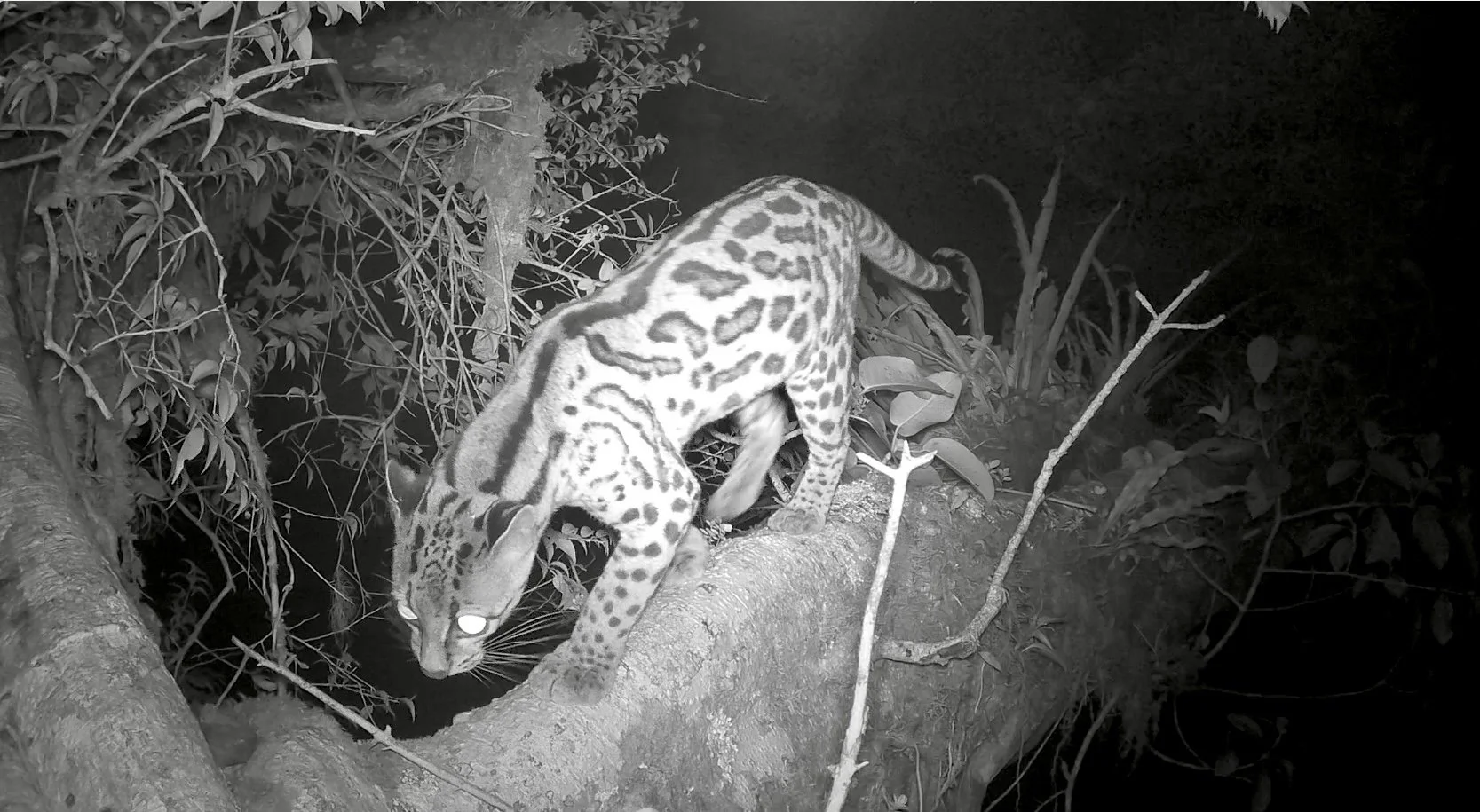
A male Margay approaches a canopy latrine an hour after sunset
New research documents arboreal Multi-species canopy latrines in Costa Rican cloud forests
We are delighted to report open access publication this week in Ecology & Evolution of our paper Multi-Species Canopy Latrines in Costa Rican Cloud Forests: A Mammal Interactions Hub in a Single Tree Species. Working in the tropics on research in hot and humid forests is always a challenge (see previous blogs here, here, here, here; also here & here). From hauling heavy bags of kit deep into the forest to rigging lines in complex, very special, epiphyte-covered giants, everything takes time, effort and a lot of sweat! But it is all worth it for the rewards as you will see in the images below.
Part of the challenge of carrying out science in the canopy is simply getting there - safety and logistics amid the structural complexity and sheer amazing diversity of the forest canopy. Forests in the tropics can be areas of exceptionally high biodiversity, especially in the tropical cloud forests of Central America. Cloud forest is the most threatened forest type in the world with very high, and localised levels of endemism - a species can be limited to a single 10km area and no-where else in the world!
Sadly, the cloud forest is disappearing at an alarming rate to make way for agriculture and climate change is exacerbating these pressures. These biodiversity hotspots are in remote, high mountainous regions. The species-rich canopy layer, 40m or more above the ground, is place where every single branch is covered in a thick dense layer of plants. Rich in epiphytic communities, these plants provide habitat for birds, invertebrates, reptiles and even mammals.
“Studying plant–animal interactions in tropical forest canopies is challenging. The first obstacle is climbing trees, since some reach heights up to 40–60 m tall. They are commonly covered in dense layers of epiphytes associated with harmful animals (e.g., wasps, vipers, ants) and bear many snap-prone branches. As a result, tropical forest canopies remain a relatively understudied component of these ecosystems”
Latrines are well known in mammal ecology however, they are always at, or near ground level. So when we encountered multi-species mammal latrines 30m up in trees we knew we had found something pretty special. The newly identified latrines are always sited in large, open unions of massive trees of a single species in the genus Ficus. These are often called ‘strangler figs’ for their habit of growing around, then finally killing off, their host tree species which rots and ultimately leaves a hollow stem rich in micro-habitats and cavities, creating a home for so many species across the taxa from weasels to cats to spiders and the breadth of invertebrate life found there. Located on the edges of steep mountain ravines in the mountains, they are simply full of life.
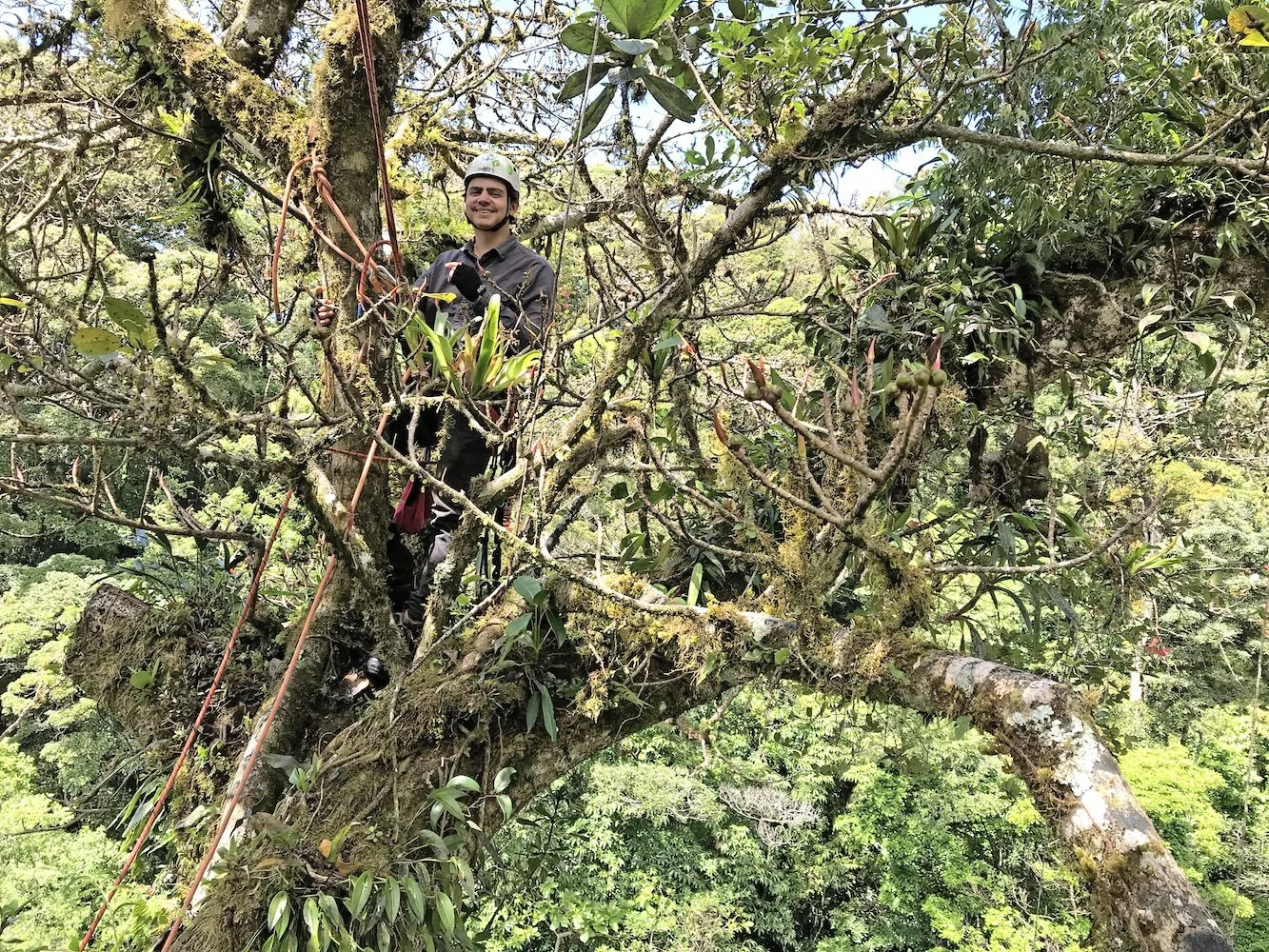
Canopy specialist and botanist extraordinaire, Jeremy Quirós-Navarro in an over-mature Ficus tree.
Leading the team was canopy specialist and botanist extraordinaire (he is currently describing several new species to science), Jeremy Quirós-Navarro. Jeremy’s breadth of knowledge and experience across the remote forests of Costa Rica is really quite something. Together we rigged and climbed the first tree that was to lead to this discovery and I learned a lot about the vegetation including finding a minaturate flowering orchid species. Later, with our colleague Deiver Espinoza, a series of camera traps were installed in several large trees and this is where it gets really interesting.
We recorded an astounding 17 mammal species making a total of 181 visits over 60 days. Some species were frequently visitors to these canopy latrines and one of the most surprising of these was a species of sloth (Choloepus hoffmanni), since our findings are the first to show that “sloths may also use arboreal latrines, challenging a long-standing assumption in sloth ecology and raising new questions about the drivers of their defecation behaviour.” This is in part because pooping in the trees is not just about getting rid of waste products, it may critically also “play a role in interspecific communication, provide spatial cues, and affect nutrient dynamics in forest canopies.”
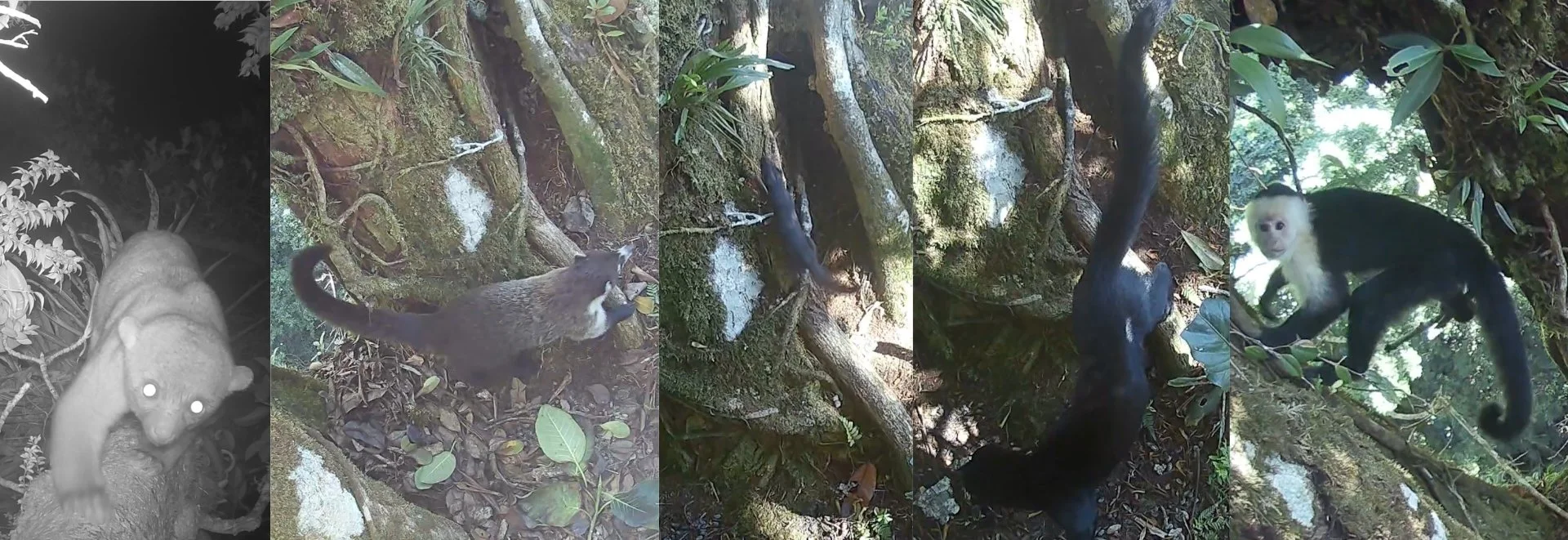
Camera trap video screenshots of (L to R): Kinkajou, Coati, Weasel, Tayra, & White-faced capuchin.
Set up to record animal visits to the arboreal latrines, our camera traps revealed far more activity than we could have dreamed of. Not only was there a remarkably high level of activity, we also were able to see for the first time aspects of arboreal mammal ecology with some species such as weasel and opossum appearing to utilise the site rich in nutrients for foraging. Many others, however are visibly exploring scents and in the case of the Mexican dwarf hairy porcupine, clearly adding to the piles of fresh poop.
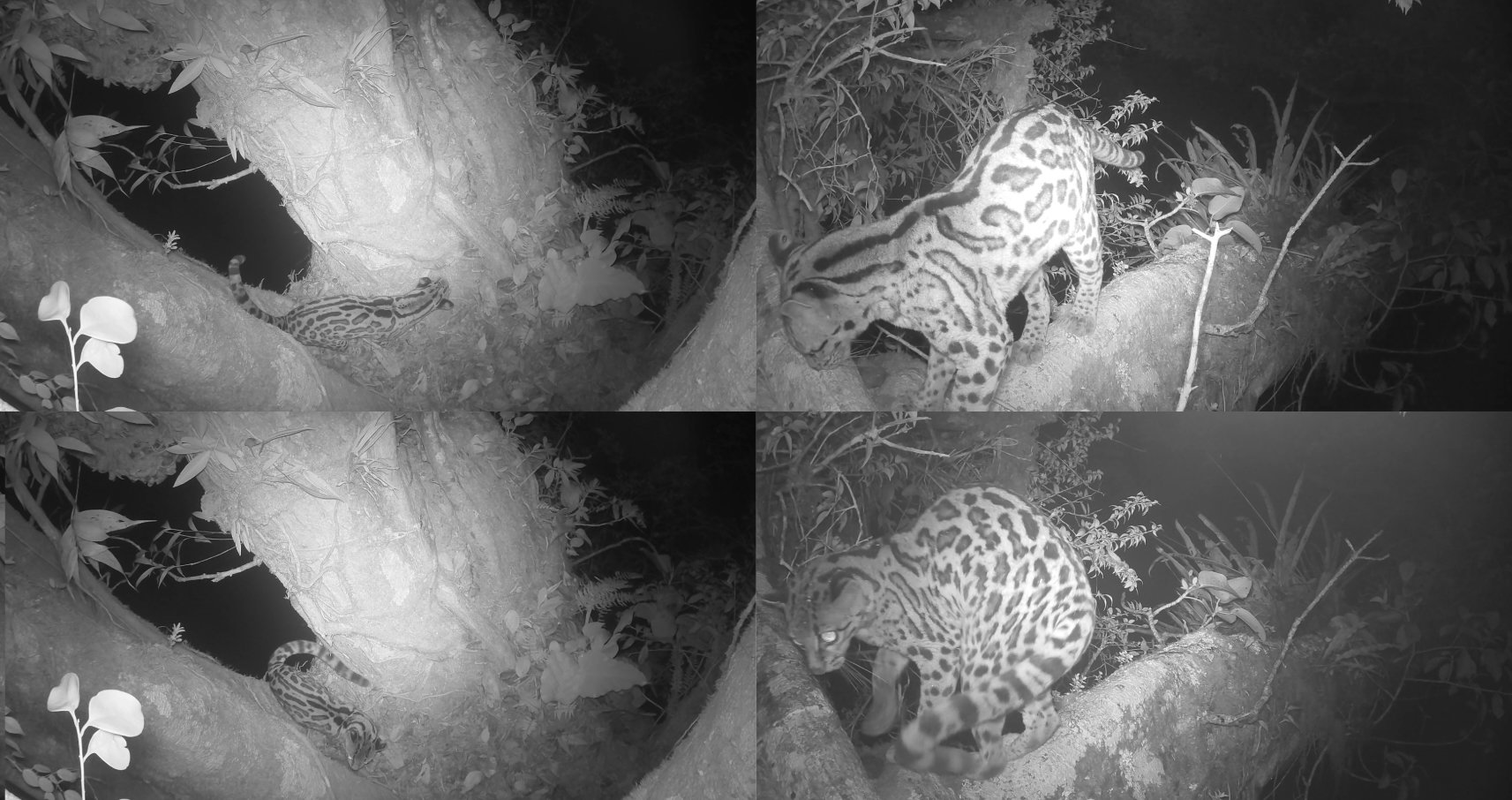
Camera trap video screenshots of a male Margay exploring scents around an arboreal, multi-species canopy latrine.
That fabulous felid, the Margay, can be seen examining several locations across the site. Amazing to think that the approach branch it is sitting on was the one I was dangling from the year before (see below). And remember, all this is over 30m above the ground! I like to imagine all those animals traversing the forest canopy infrastructure - something that seems hard to believe when you are there because, as is often the case in dense jungle, animals are very good at staying out of sight and the forest can appear empty of all animal life.
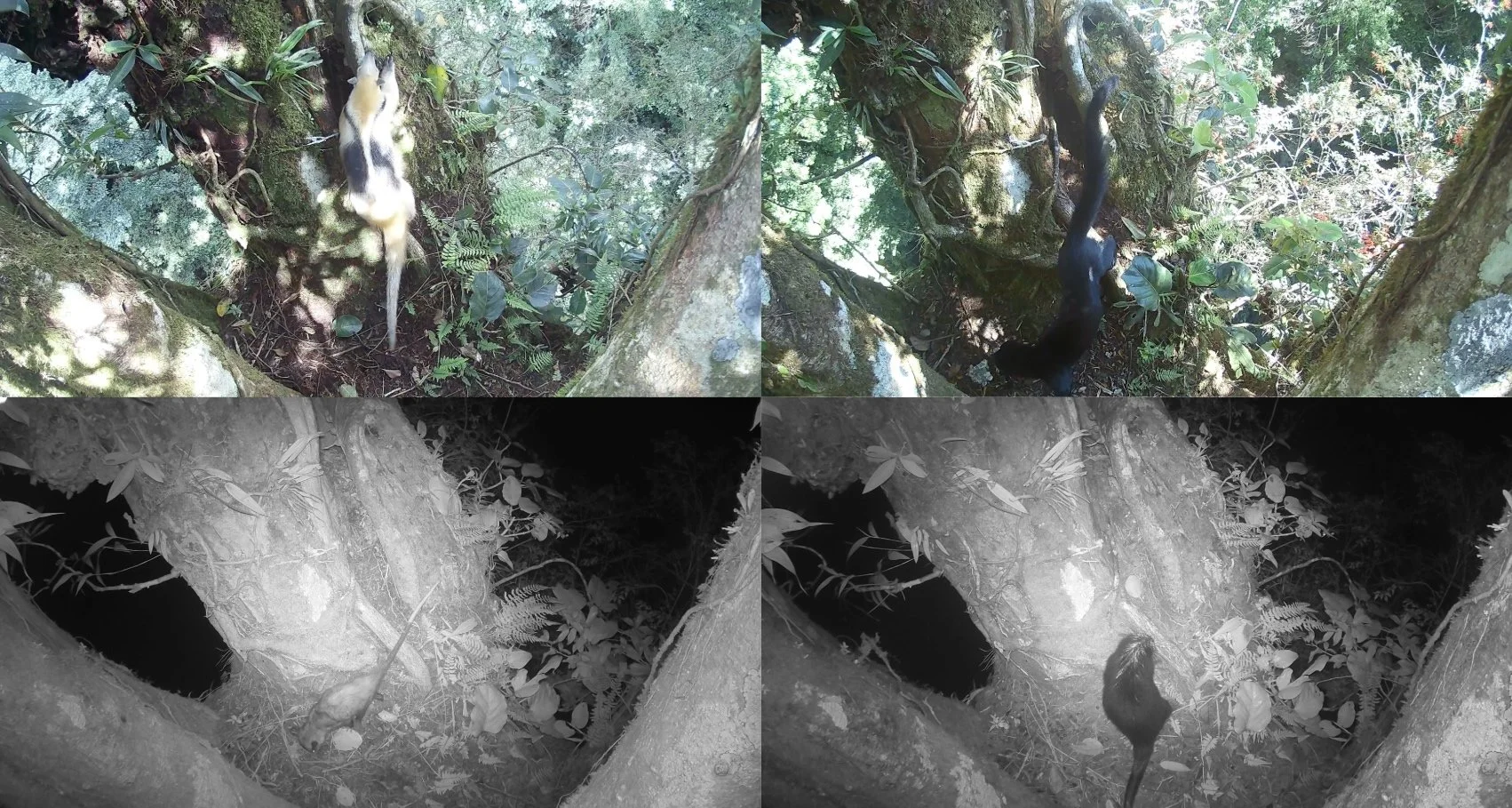
Visitors to a multi-species canopy latrine (clockwise): Tamandua; Tayra; Mexican dwarf hairy porcupine (in act of pooping!); and Common Opossum.
Finally, here are two fun images: first is a very blurry image of the front left foot of a baby sloth clinging on to its mum’s thick fur as she crawled right over the top of the camera; and second - remember the capuchin you saw earlier - well it also came for a close look at the camera too!
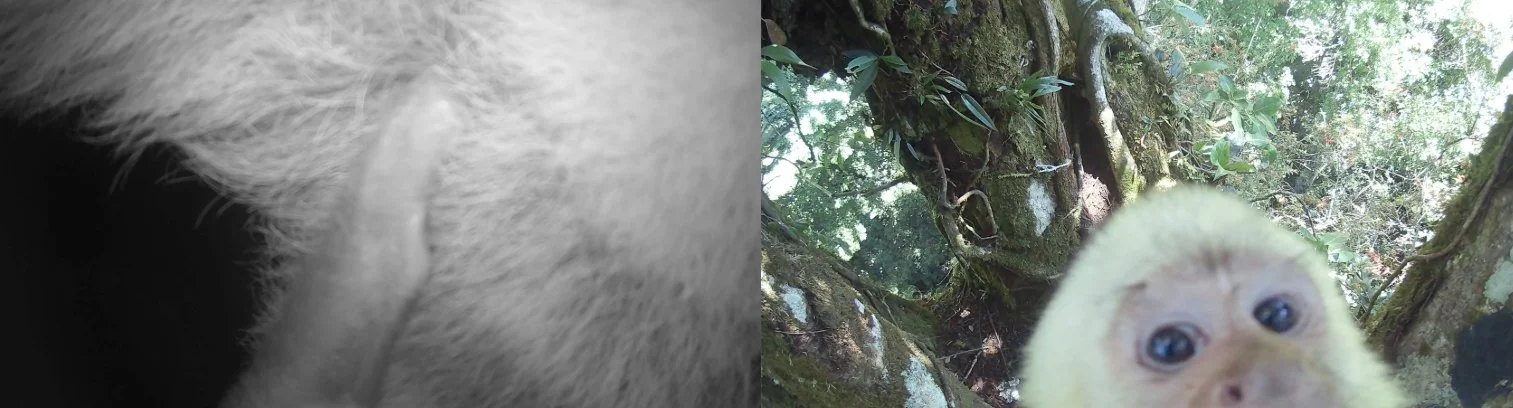
Left: Sloth baby front foot hooked into its mum’s fur. Right: White-faced capuchin comes to investigate.
We are now working hard on the next phase of the project alongside looking for further sources of funding to assist the work. With so much still to discover, it seems this is only the beginning!
Thanks to all the team including Marvin Hidalgo and Carmen Miranda at Monteverde Biological Station, Amaia Autor and Dr. Elaine Cameron, Dr. Roland Kays and Dr. Ezequiel Rodriguez, Dr. Catherine Cardelús with special thanks to Dr. Carlos García-Robledo and to the anonymous reviewers who provided such thoughtful feedback.
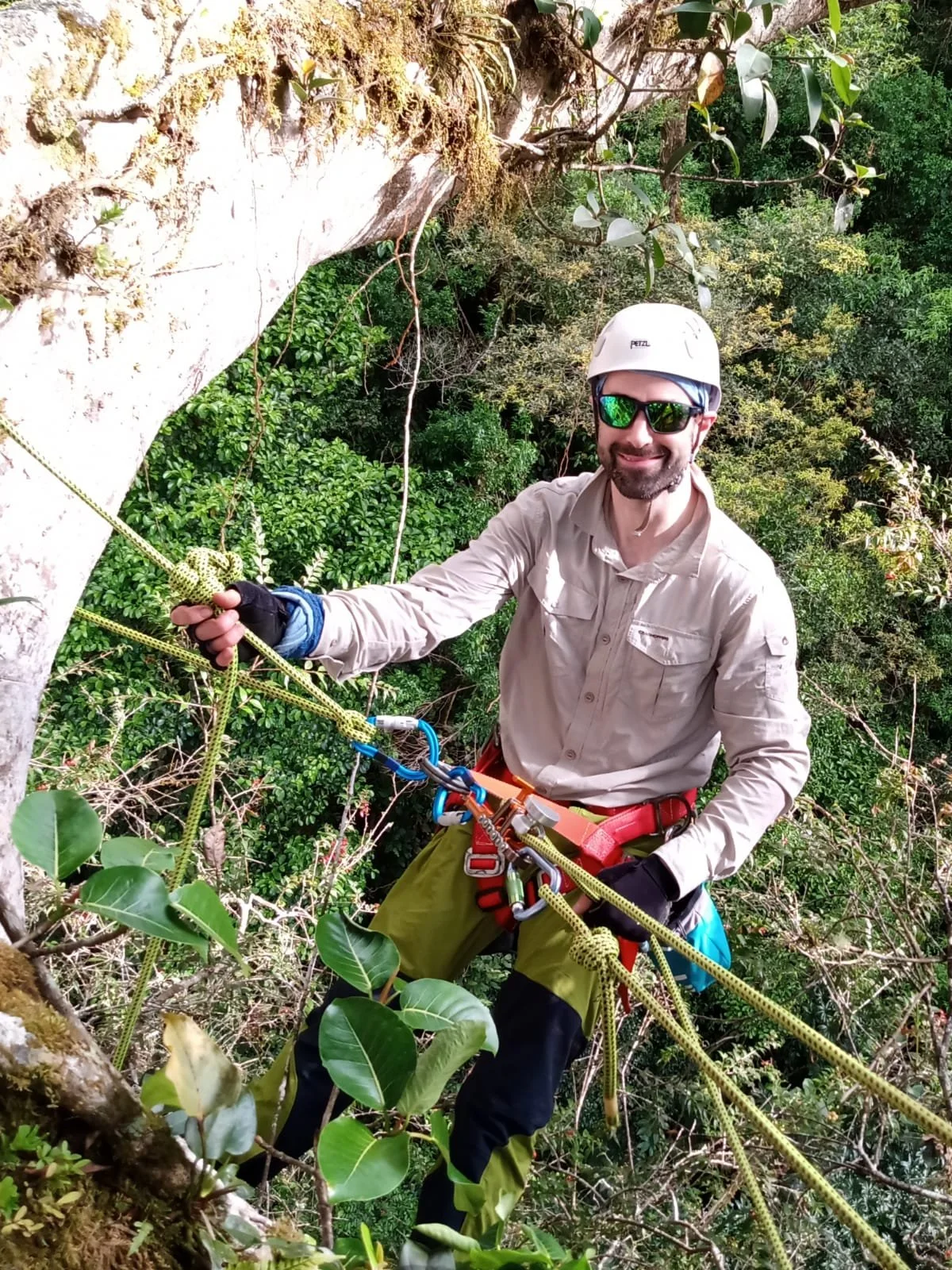
Examining the latrine site (note: the branch above my head is the one the Margay was sitting on!).
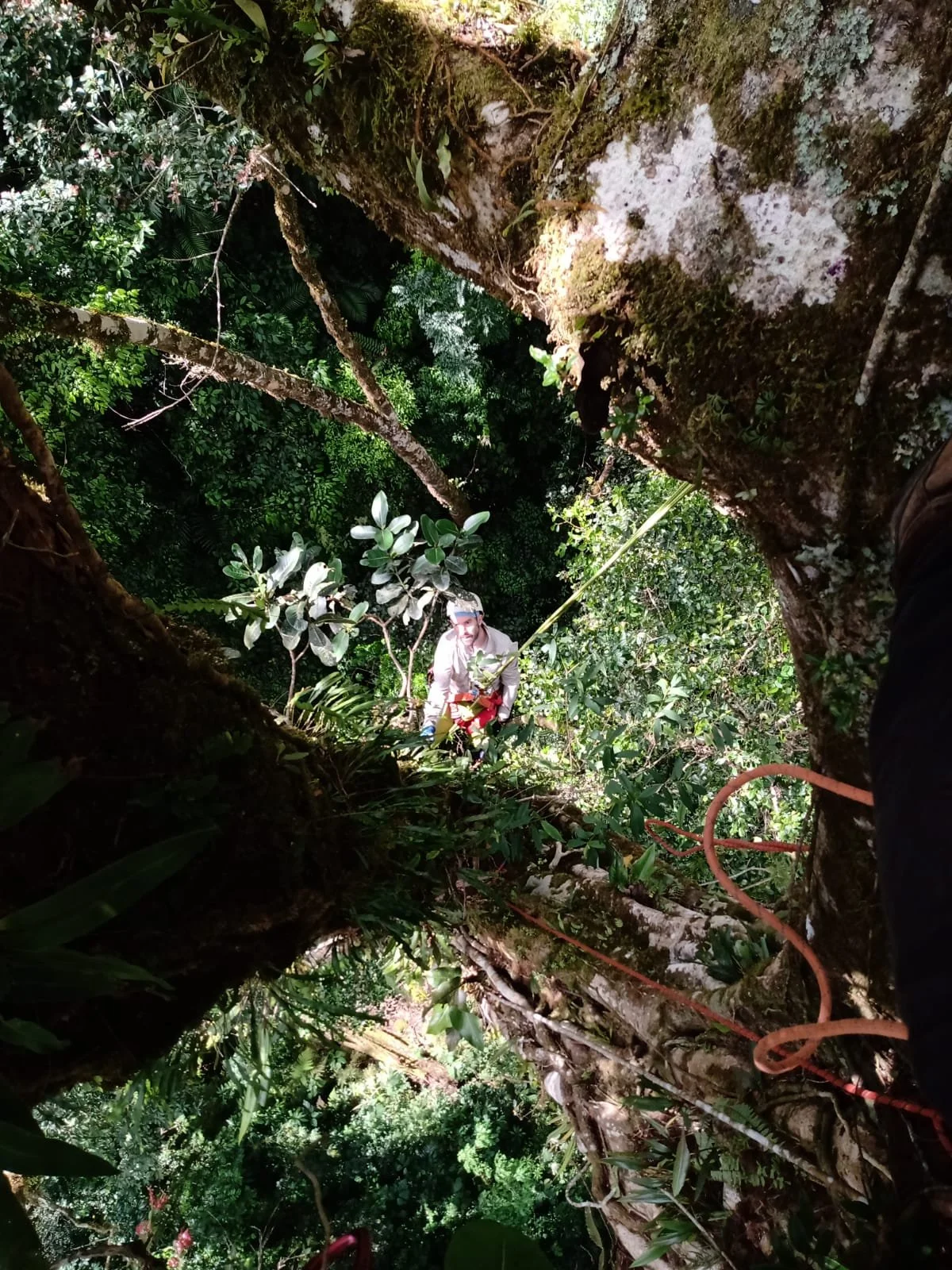
Ascending the ‘discovery’ tree with great care for its rich epiphytic communities.
