
Aspen are one of Scotland's rarest trees and are home for rare wildlife, plants and fungi. As one of Scotland's most important native trees, they are reduced to growing in wild ravines and cliffs by overgrazing. Each year I like to visit a few special groves and take time out to reflect and wonder at their hardy tenaciousness in this challenging world.
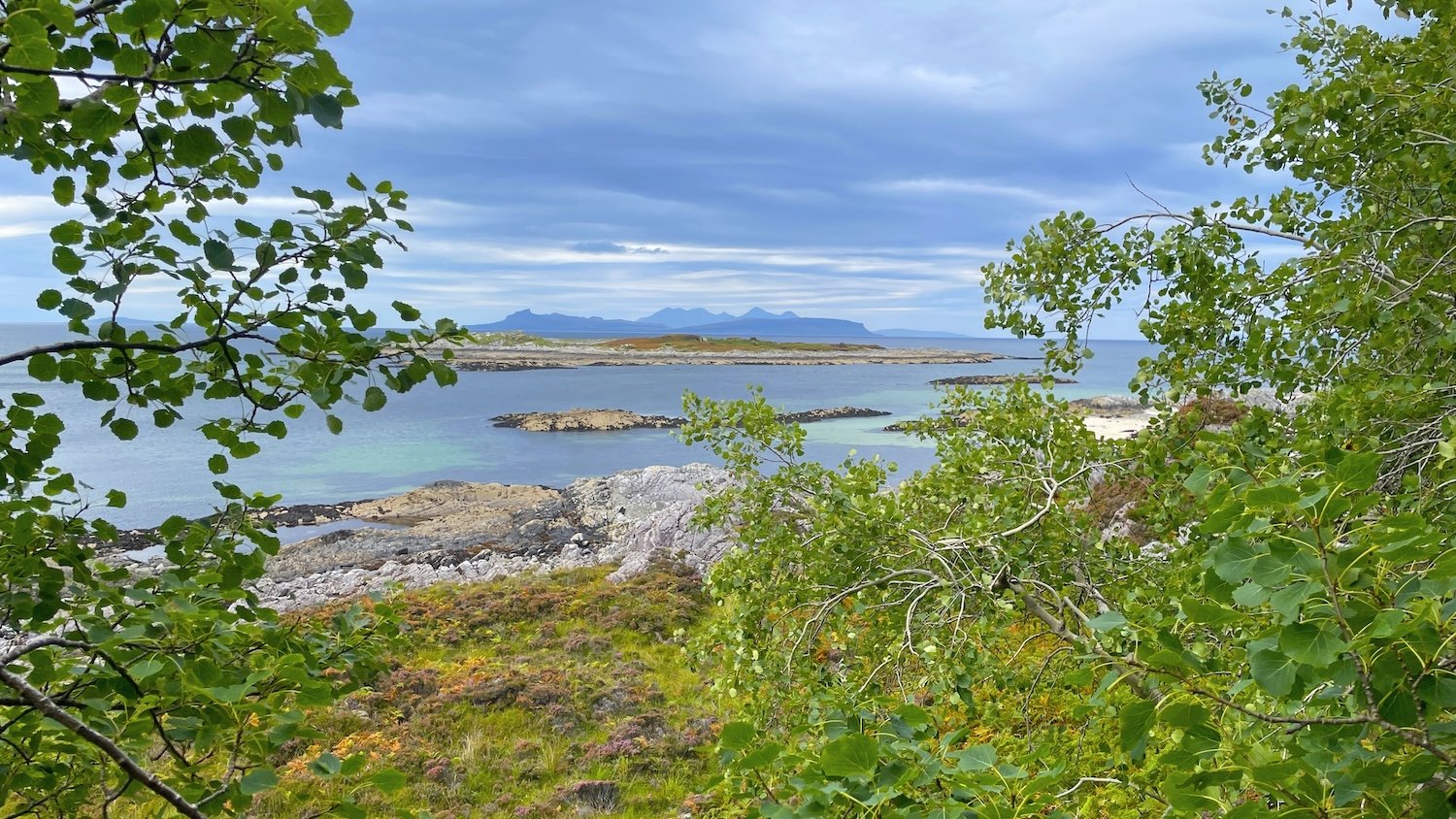
Aspens growing on a remote cliff with a fine view to the Small Isles
On a late summer’s afternoon, I hike out across bog and heather, through a gnarled wood and out to the shore. There, against a cliff, a small grove of Aspen stand quietly overlooking the Sound of Arisaig. The trees flourish in these crevices where the hungry mouths of sheep and deer cannot reach. Stunted by weather, and survivors every one, these trees touch me somehow, I am in awe of their tenacity.
Experiencing nature enriches us. Kaya McLaren tells us to "Go spend time with the aspen trees. They'll tell you how it works. They'll tell you to look to your roots for energy. They'll tell you there's warmth below the surface." And in When I am among the trees Mary Oliver also hears their call: “Around me the trees stir in their leaves and call out, "Stay awhile."
At each visit I check in with them, ask them how they are. They never answer of course, but I do listen. In spring they can appear to be still sound asleep there look carefully and you can find the first new leaves, each a delicious coppery colour and so delicate. Long after leaf burst, the smallest of breezes causes them to shiver and rustle, and there is something hypnotic in those susurrations as the waves paw the shoreline. Try as I might to time my arrival with autumn, a hunt for yellow gold, but these trees, being right beside the waves often have their leaves stripped off by the first autumn storms.
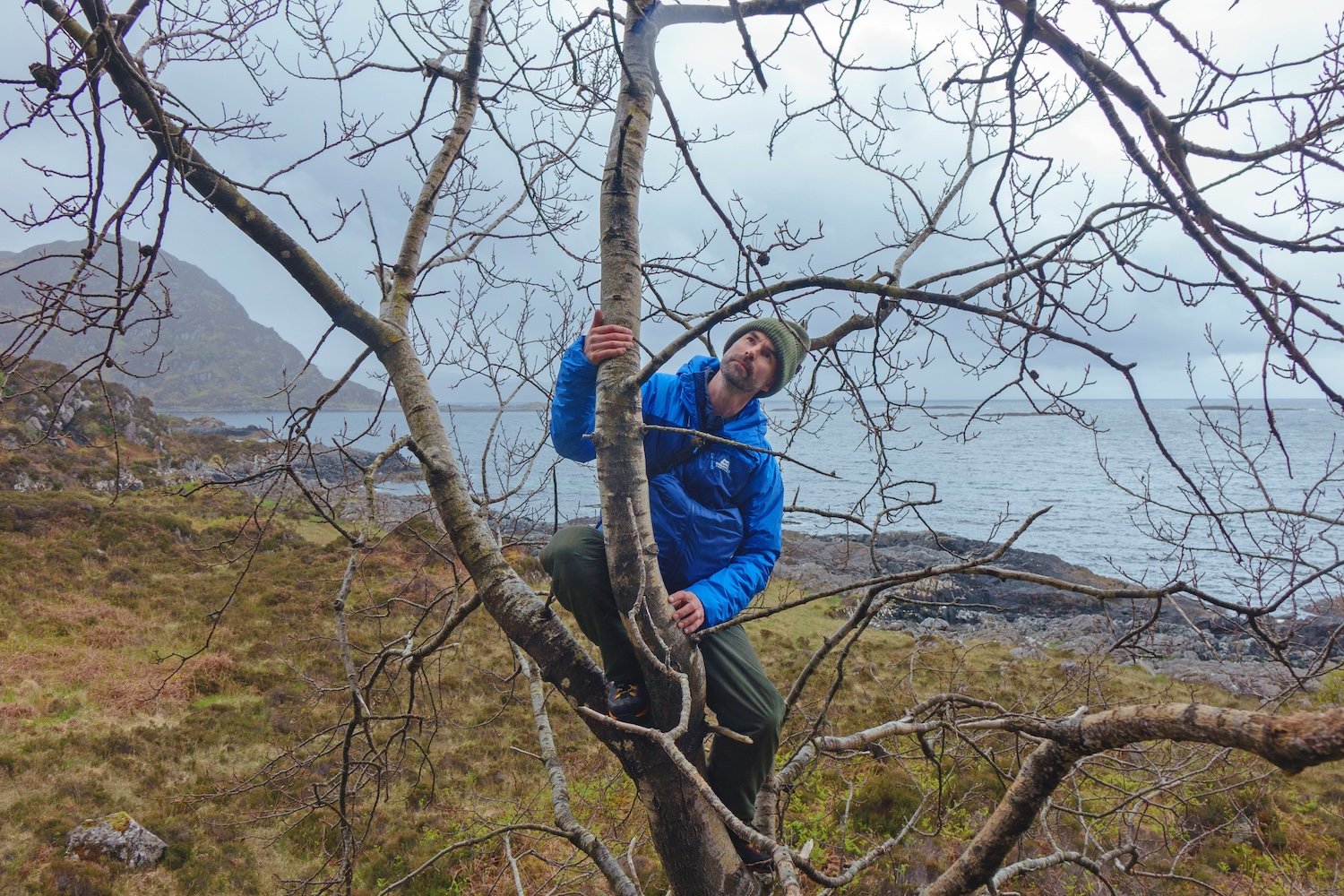
Tree time in one of the wonderful Aspens
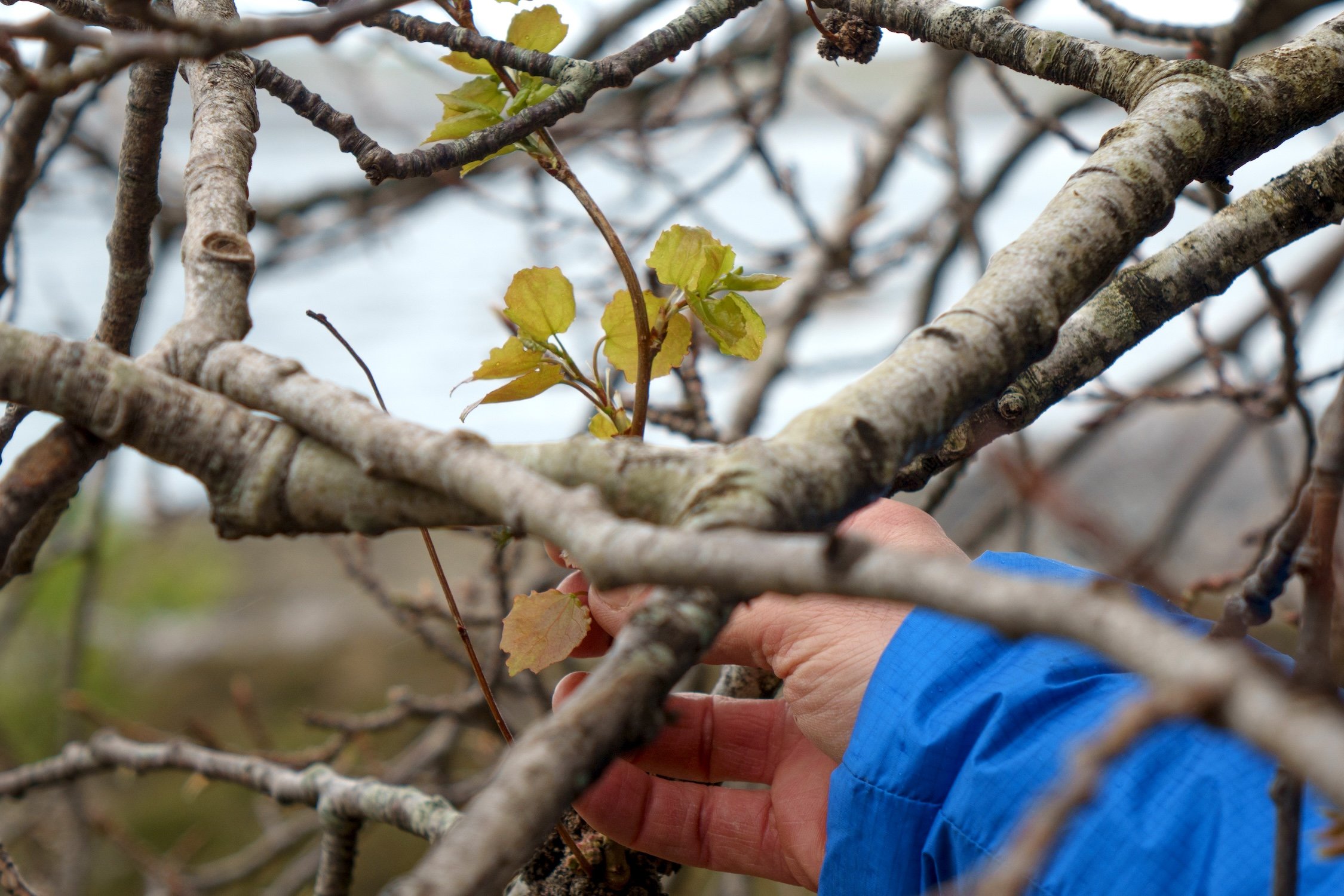
Leaf burst in an Aspen
Alan Watson Featherstone writes of a photosynthetic quirk of Aspens. Here, green areas remain on fallen aspen leaves as the result of the larva of the Aspen Green Island Leaf Miner moth. The action of the feeding larvae prevents the withdrawal of chlorophyll from that part of the leaf when the tree tries to retrieve all its resources before leaf fall: “This keeps that section of the leaf green while the rest of it turns yellow, thereby giving rise to its common name of 'aspen green island leaf miner.”
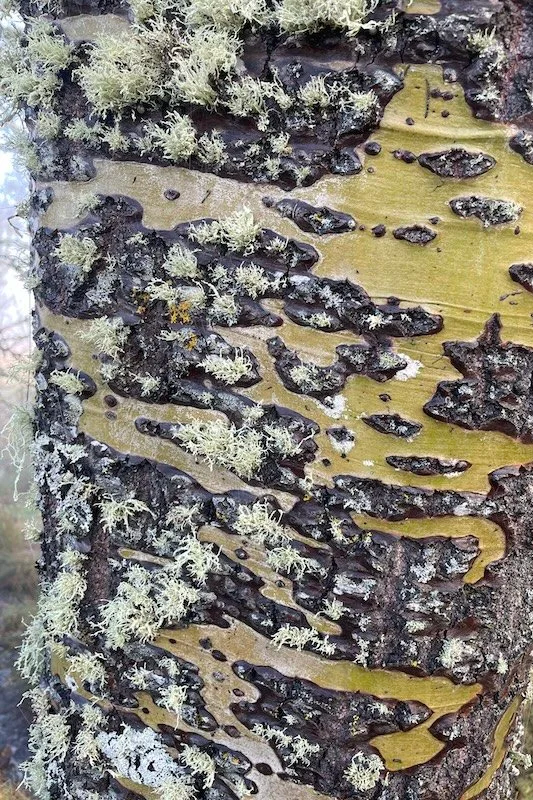
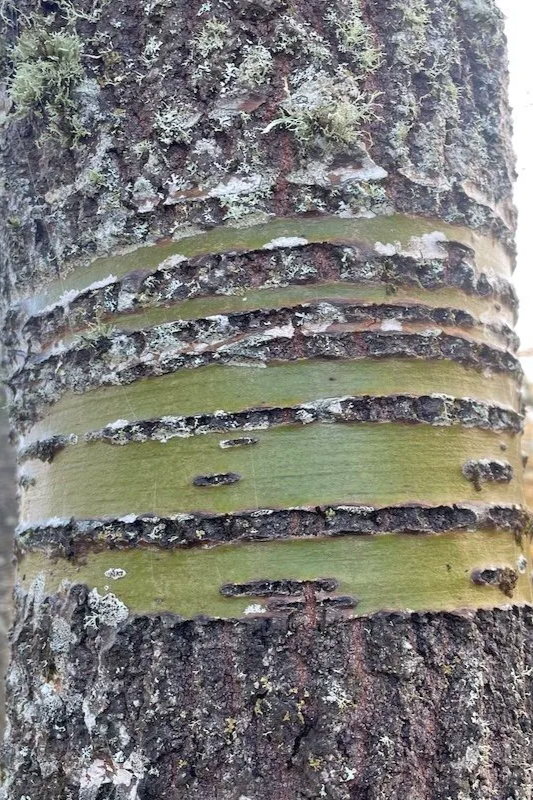
In a previous blog we explored a special grove where we discovered an extraordinary photosynthetic properties of Aspen bark. As a clever way of gleaning extra energy through the winter, does this mean that Aspen never truly sleep? Here are a few more images below showing different distributions of the amazing smooth green epidermis amongst rough bark pitted with diamond-shaped pores.
“This important physiological aspect of bark photosynthesis [as a] contribution to the carbohydrate supply of the bark when phloem transport is minimal and when deciduous trees have lost their leaves.”
Known as corticular photosynthesis, the trees have a green, chlorophyll-containing layer beneath a thin outer bark. This layer is able process starlight into energy, converting sunlight, water, and carbon dioxide into sugars and oxygen. For trees growing in tough sites, this additional ability to make sugars will be of great benefit during the winter. Note how the distribution and hue of each tree is different.
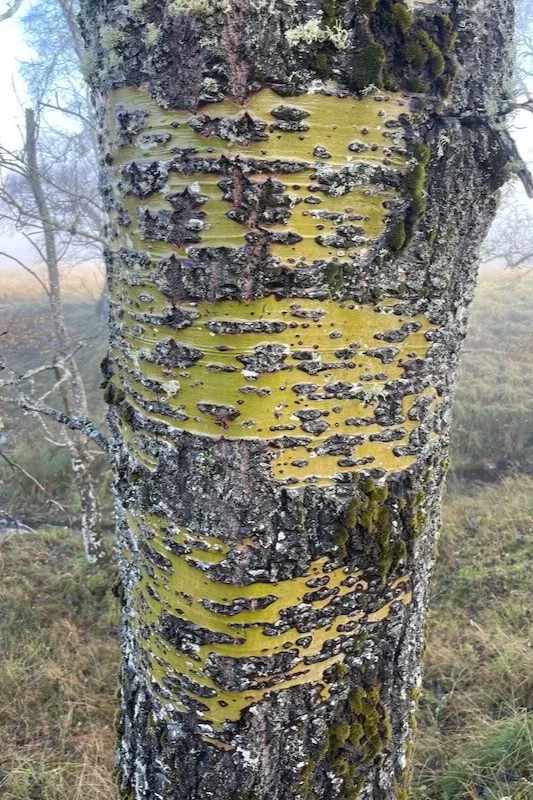
Photosynthetic bark - tree 1
Photosynthetic bark - tree 2
Photosynthetic bark - tree 3
Each separate aspen clone even has its own individual colouration. The two green leaves below are from separate clones from trees in the feature image. The burnt orange leaf is from a tree on the shores of Loch an Eilein, showing the deep colour they can get in autumn. And the arty black & white shot was on the shores of Loch Laggan, the water droplets fascinated me, best I could do with an iPhone!
Out on the hill, Aspen grow vegetatively by producing suckers or ramets which sprout from the roots of mature trees. These new shoots become trees that stay joined to their parent tree by their roots. This is how each grove is a separate clone with each clone having its own characteristics - the new trees will be the same sex and show the same synchronous behaviour as the parent tree. Why Aspen flower so rarely is a mystery with 1996, and 2019 the last times they did so in Scotland. It is only very recently that Trees for Life have managed to crack the mystery and now have nursery of Aspen that produce seed for growing lots more trees to plant out across Scotland.
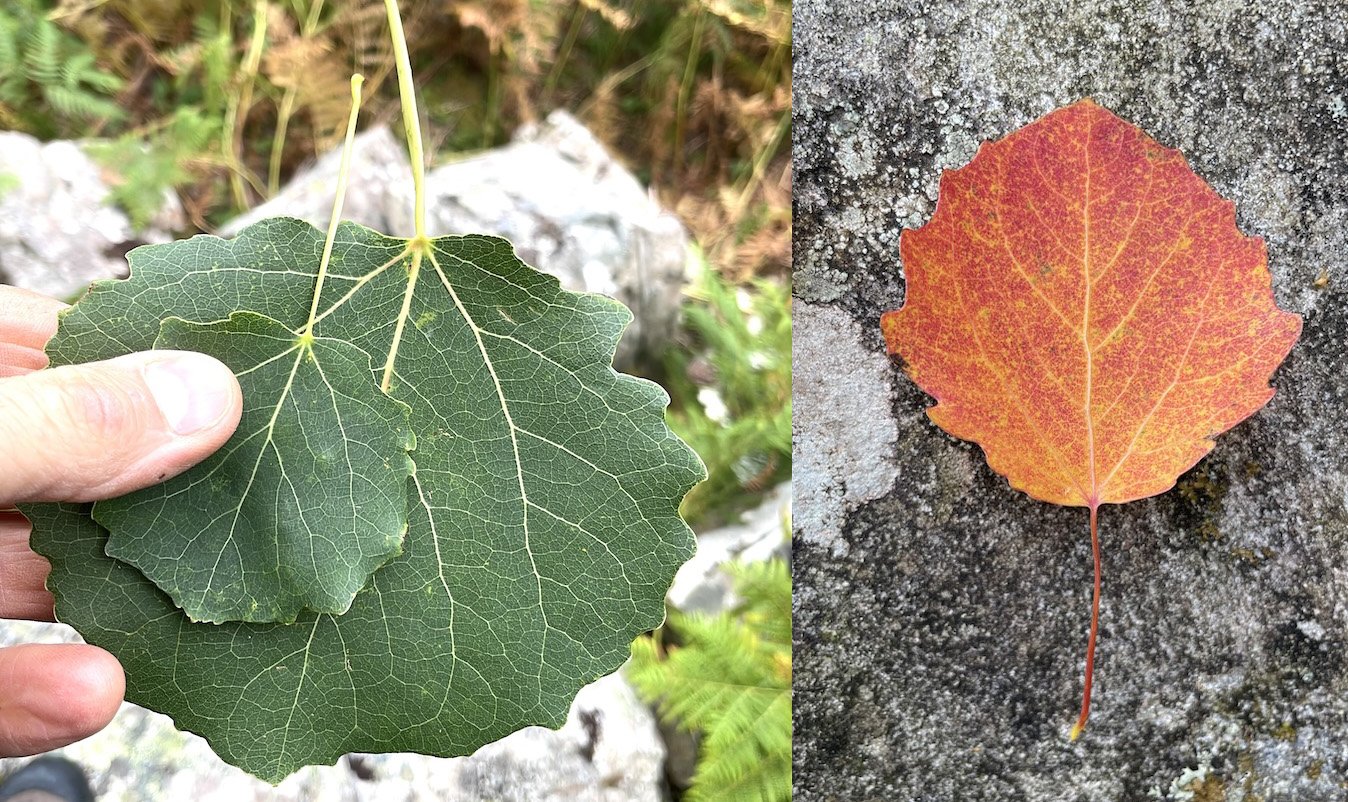
Aspen leaves from different clones
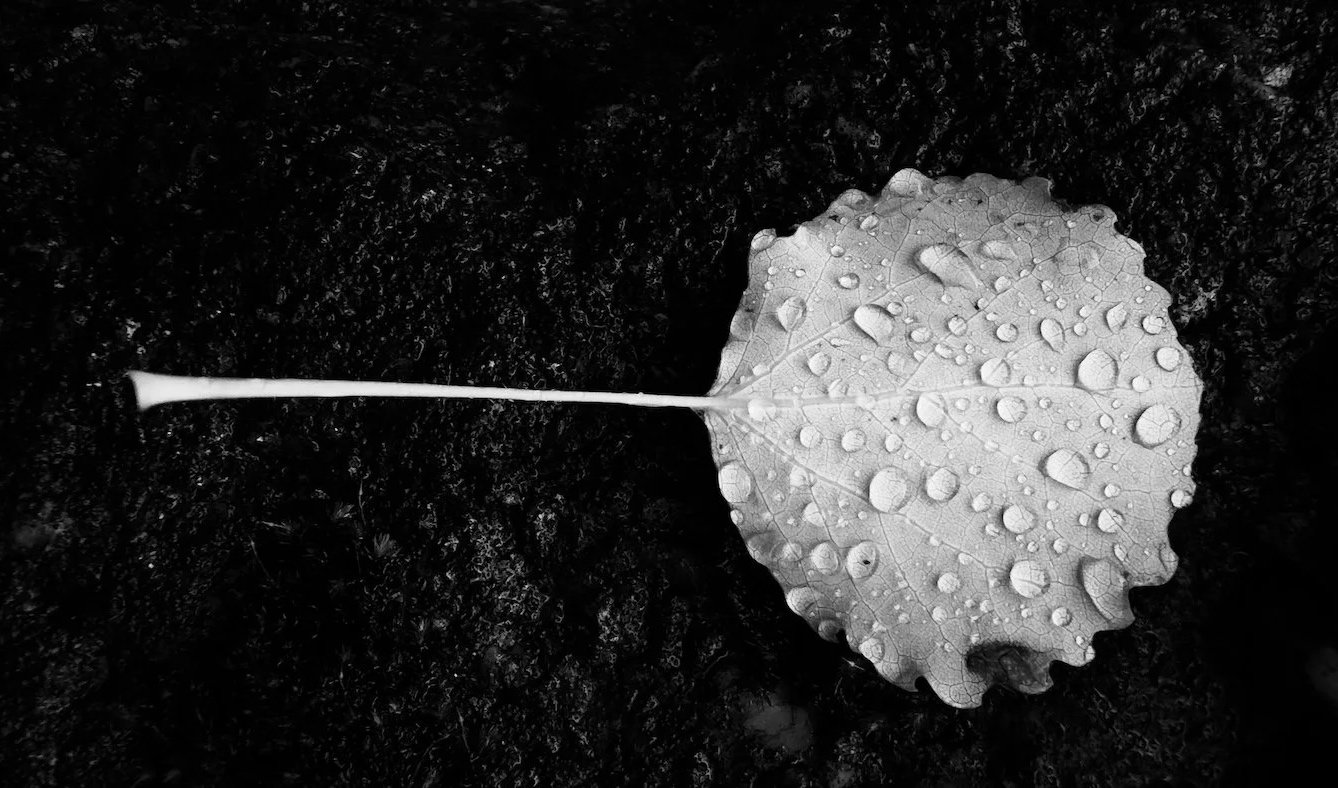
Rain drops on an Aspen leaf
Aspen is a pioneer species and ecologically, Aspen are considered a keystone woodland species. They are a documented host to at least 100 species of fungi and a further 130 species of lichens including a super rare lichen only grows on Aspen twigs. Other species that love Aspen include the rare dark-bordered beauty moth whose caterpillars feed on the young shoots. Other insects rely on old decaying aspen such as the endangered aspen hoverfly, a weevil called the aspen leaf roller, and three invertebrates that live in galls including two gall midges and a mite that causes cauliflower galls. In total, over 60 species of insect have been recorded feeding on aspen foliage. And don’t forget the larger animals - beavers also love to feed on Aspen!
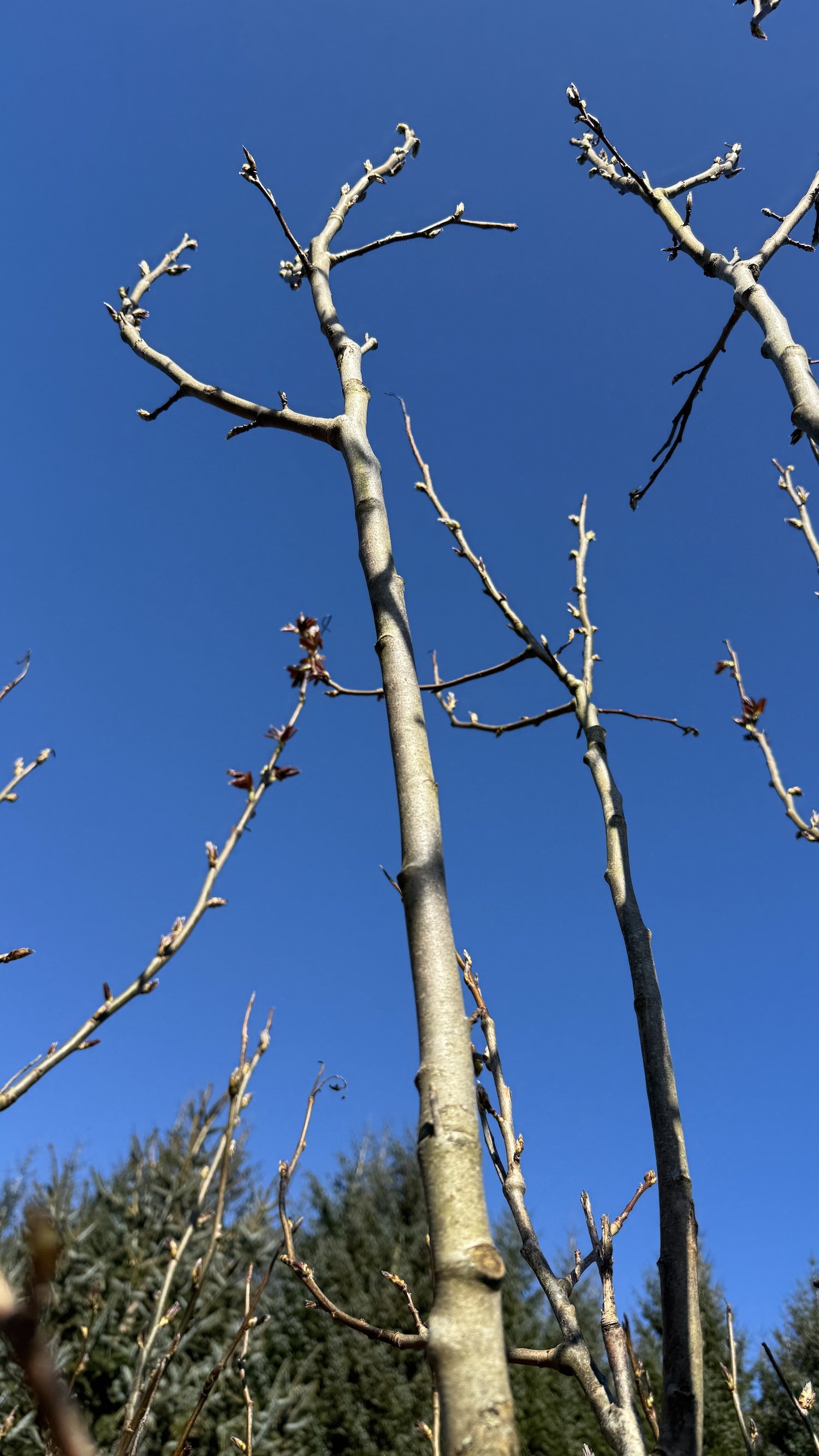
Aspen in spring near the top of the tree
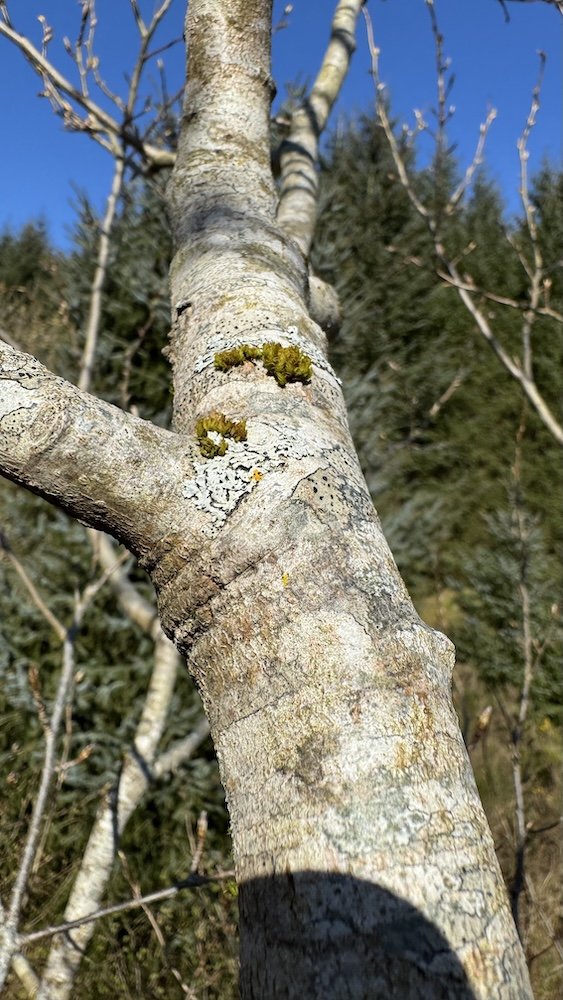
Lichen community in the upper crown
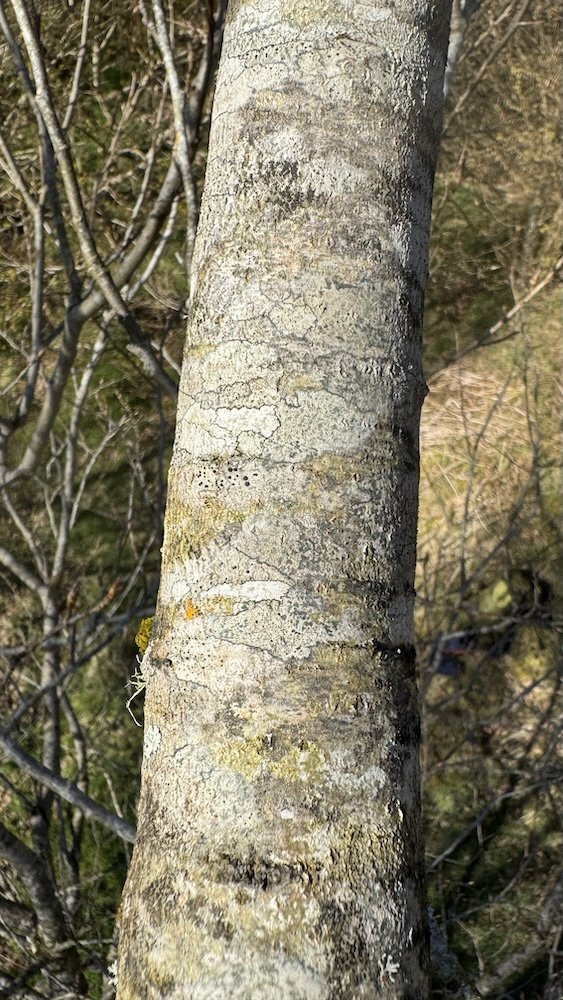
A wealth of lichen communities
Aspen are not a long-lived species as an individual, some may get to 100 years but as clonal colonies, the clone can be very long lived indeed, like the world-famous Pando which scientists have estimated to be around 10,000 years old! Although the trees below right are small and seemly unremarkable, growing ever so slowly in a steep cleuch at 400m above sea level in the Moffat hills means they are probably a lot older than you would guess. Summers are short, the conditions harsh, and sadly, since the local farmer pulled out the once protective stock fence, the sheep now ravage any young Aspen that dare to flourish below the cliffs. Across the country the story is the same - overgrazing need to be tackled before Aspen can truly flourish once again across Scotland.
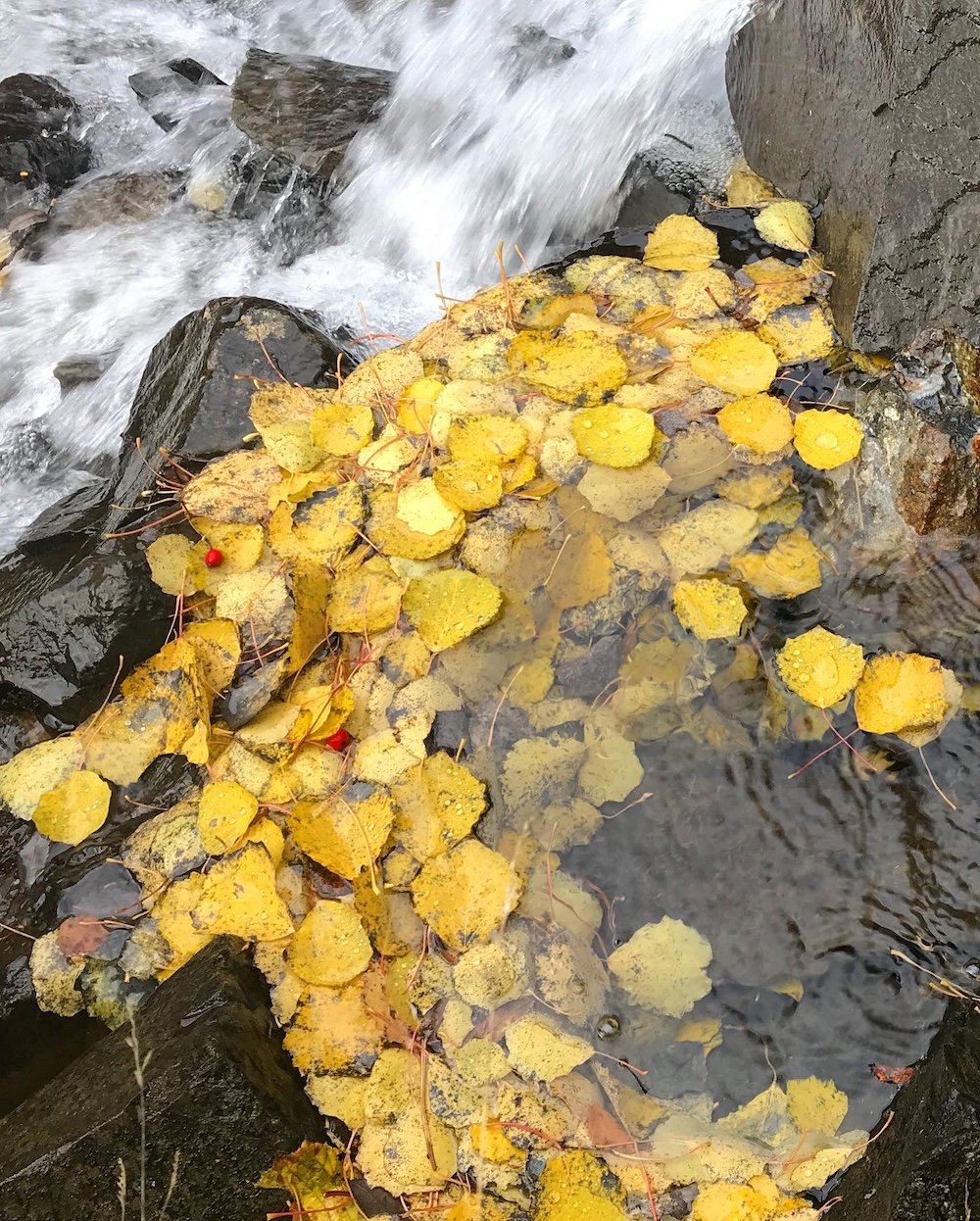
Golden aspen leaves in a stream side pool
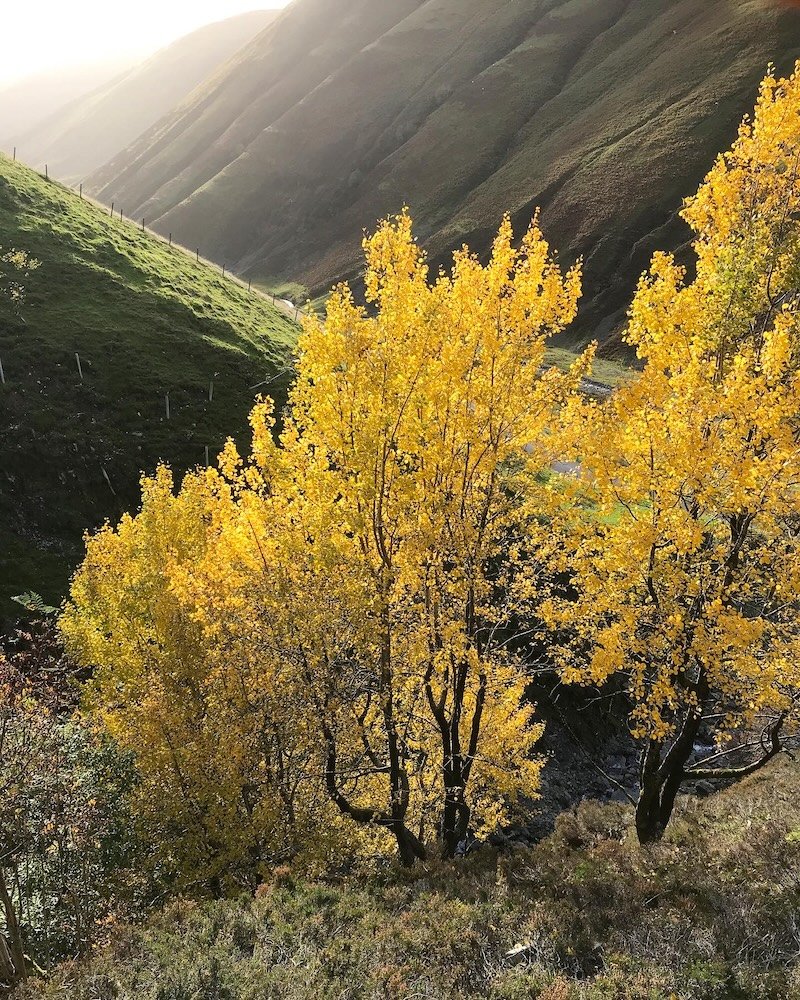
Cleuch survivors in the Moffat hills
