
We specialise in providing safety at height solutions for working with Schedule 1 raptors and TV. Here are some highlights from some great conservation projects across the UK, working with wildlife in challenging environments.
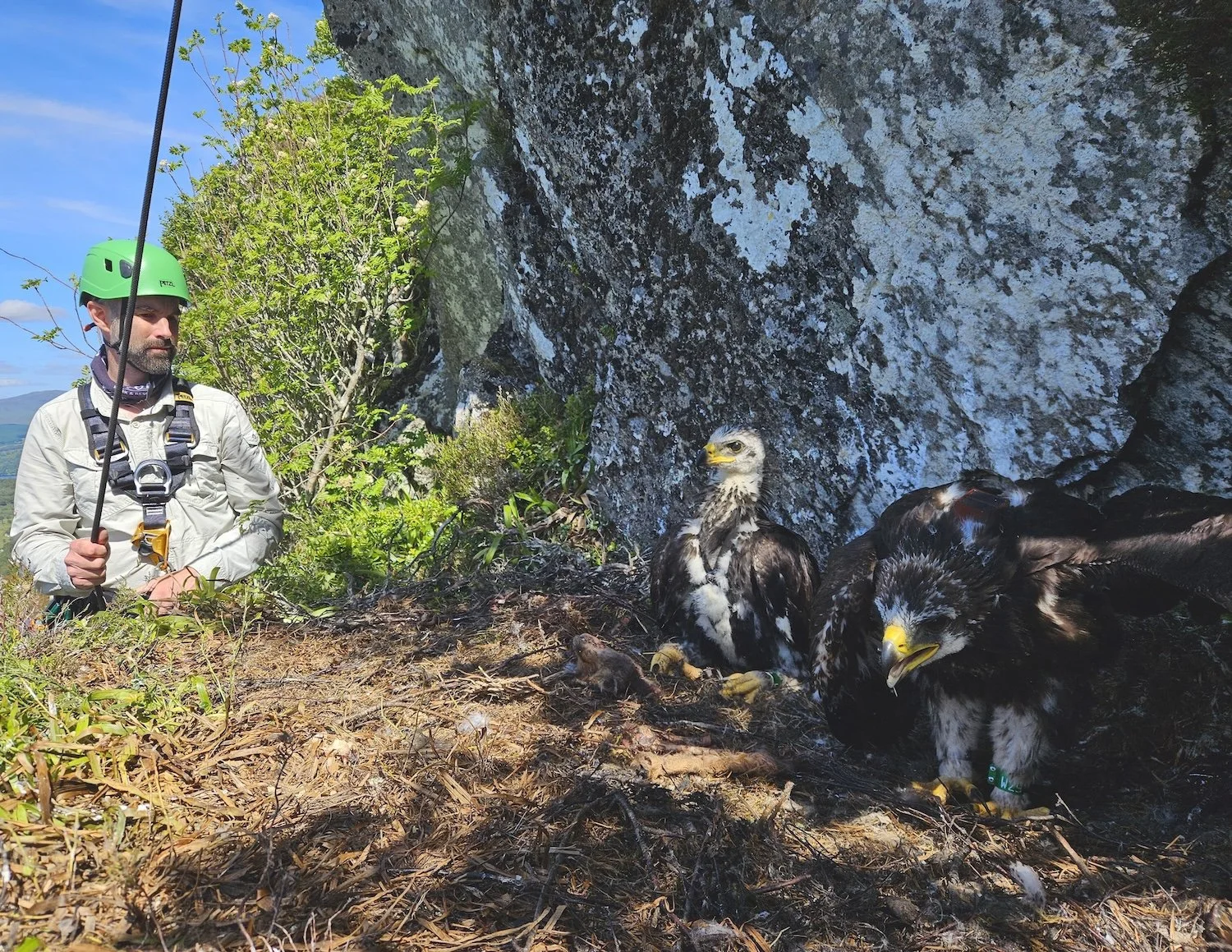
Rope safety at a Golden Eagle nest © Ewan Weston
Rope Access allows us to work safely in complex environments otherwise out of reach and working on conservation and education projects outdoors is always interesting. 2026 was packed with a great range of safety work across the spectrum. There were also a few firsts too, including an amazing chance to work with Golden Eagles in Scotland - a real privilege and what a bird they are!
“Rare, iconic species living in our landscapes are legally protected during the breeding season. Working with them means that effective safety solutions have to integrate working-at-height best practice with a sensitivity to wildlife alongside compliance with wildlife protection law.”
These Golden Eagles are studied under licence as part of annual monitoring for Tayside & Fife Raptor Study Group. Our visit to the nest, deep in the mountains of Perth & Kinross, was to fit special GPS tags. At the nest, the chicks were so big, and inspired a sense of quiet awe. Appearing docile, the chicks were handled very carefully (they have huge talons!) with their tags fitted under licence by eagle tagging specialist Ewan Weston. As a trained ringer Tim was allowed to fit both BTO and colour-ring to one of the chicks, a very special , a very lucky day indeed!
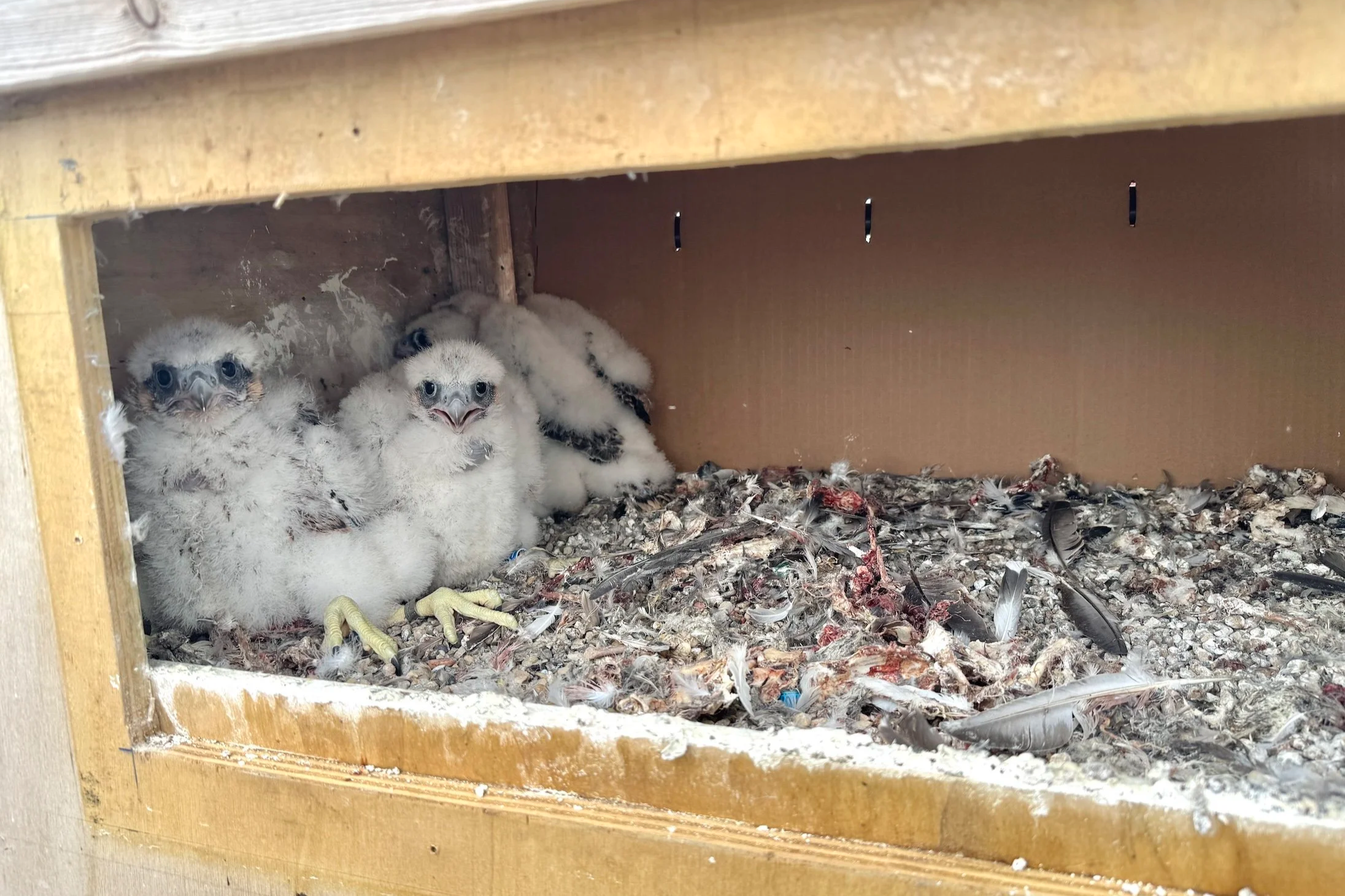
Peregrine chicks at the top of the Poole ASDA building
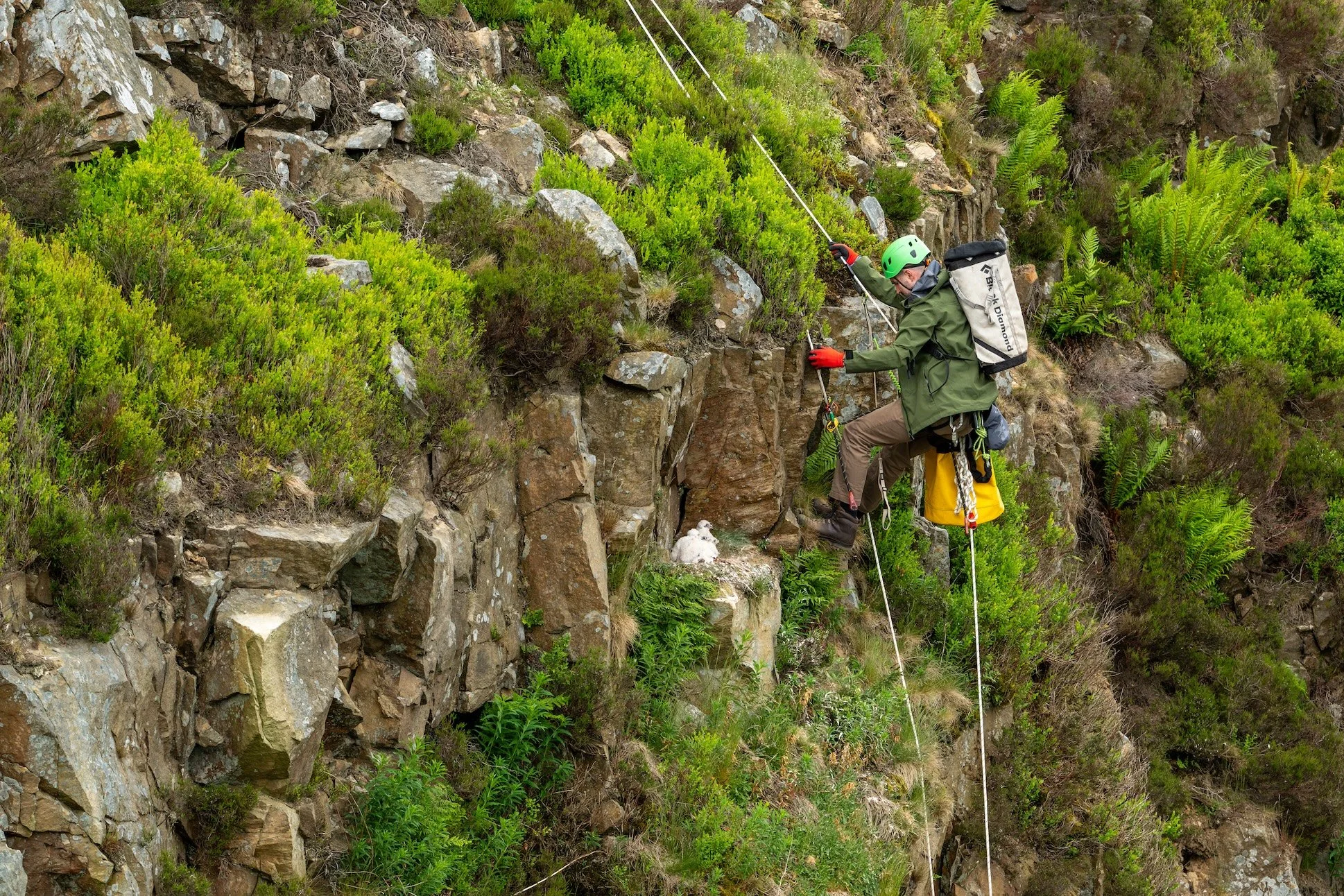
Accessing a Peregrine nest on a cliff © Mark Harder
Further south, we provided safety for access to other Schedule 1 species including for scientists working on Peregrine Falcons. Rigging safety systems and abseiling into the quarry, the chicks were carefully brought up for bringing and measuring. The Poole ASDA peregrines were a little different as we had access direct onto the roof so rigging here was for a work-restraint system. The young peregrines were far from docile and once biometrics were taken and rings fitted, they were more than happy to be back in the comfort of their nest box.
“Providing safety at height solutions in areas inhabited by Schedule 1 raptors requires a carefully controlled, multidisciplinary approach. By combining robust access systems, strict environmental controls, and specialist training, organisations can ensure safe operations while fully protecting vulnerable bird species.”
Annual monitoring of Eurasian Hobby, as part of a long-running project focussing on Wareham Forest FE, was a tough one this season. With soaring temperatures and parched landscapes, extra safety measures were needed to stay safe in a tinder-dry landscape. Wildlife found things a little tougher with Hobbies fledging smaller broods like this young duo below, in their nest in a heathland Scot’s Pine. All young Hobbies were fitted with Dorset Raptor Study Group colour rings and excitingly, 2026 has seen a real uptick in colour-ring sightings of birds from previous years, some of which are now breeding nearby.
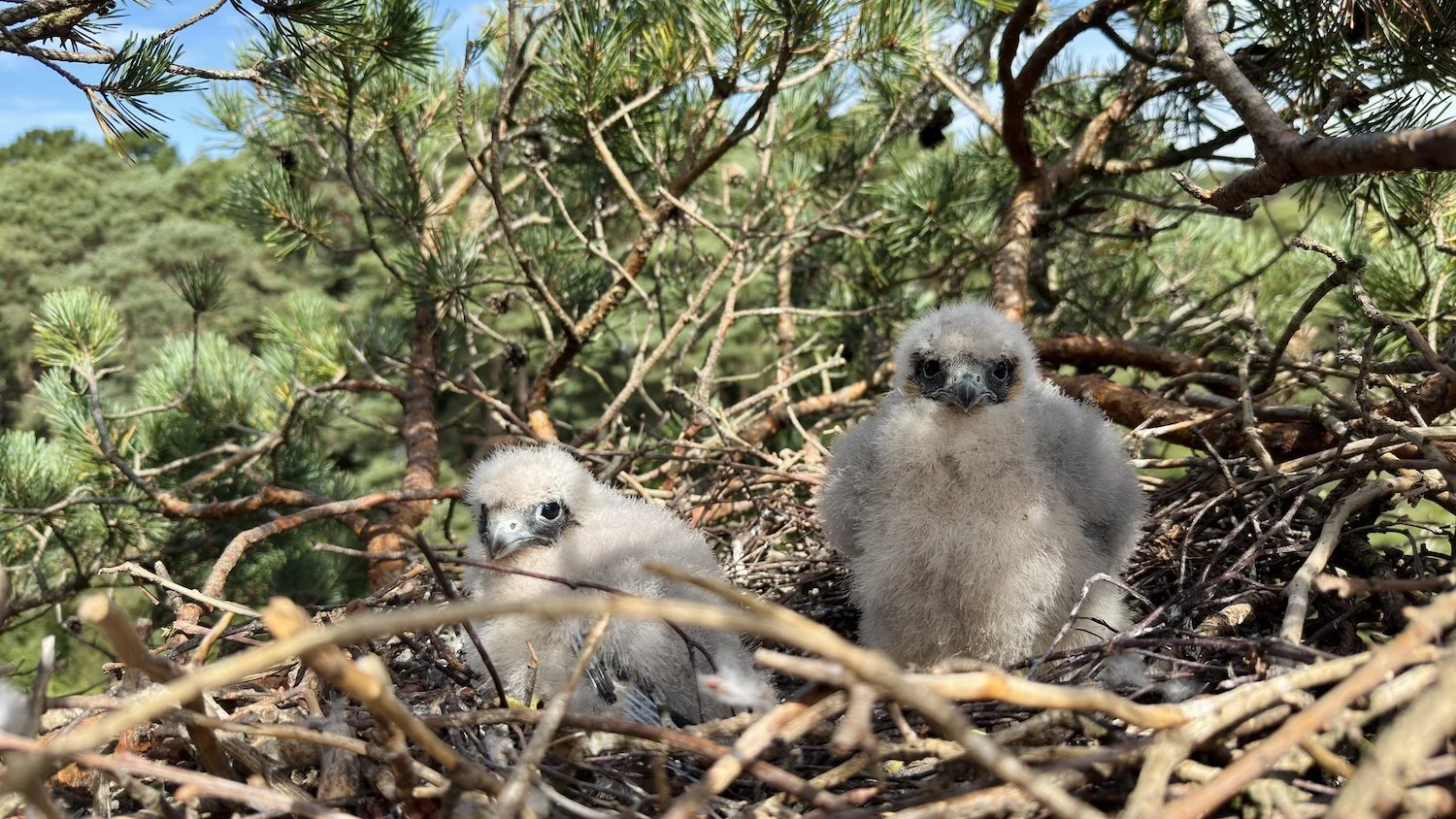
Young Hobby chicks in their nest ©Dorset Raptor Study Group
The year began with LOLER equipment inspections, a good thing to do on a wild ether day. Camera work has to be carried out outdoor and assisting companies like the amazing Wildlife Windows with bespoke nest camera installs is always interesting. These take place outwith the bird’s breeding season and this year included species like Grey Heron, Hobby, Osprey and the mighty White-tailed eagle. Of course, working in winter often involves enduring some challenging weather conditions alongside reduced daylight hours - it can be a real challenge with plenty of Type-2 fun!
“Tree Climbers and Rope Access Technicians are trained in advanced working at height skills. Part of this includes training for emergency rescue at height, a skill critical in remote locations.”
There there are the birds monitored in our ‘spare’ time. All the data goes to the BTO and involves observing, and often accessing nest sites for ringing and gathering data. Ravens hold a special place in my heart from teenage journeys into the hills, assisting raptor workers back in the 1990s. With their deep call and resilience during the late winter , they are impressive birds. Raven’s are super early nesters, and so you can see why they go to so much trouble to line their deep, stick nests so well - it sure looks toasty in there, though not so sure how much the chick appreciated this in the hot April sunshine. Hence why our visit was at sunrise when the air was still deliciously cool. Other work included ecological consultancy with wildlife-sensitive controls including pre-work surveys to establish buffer zones around active nests.
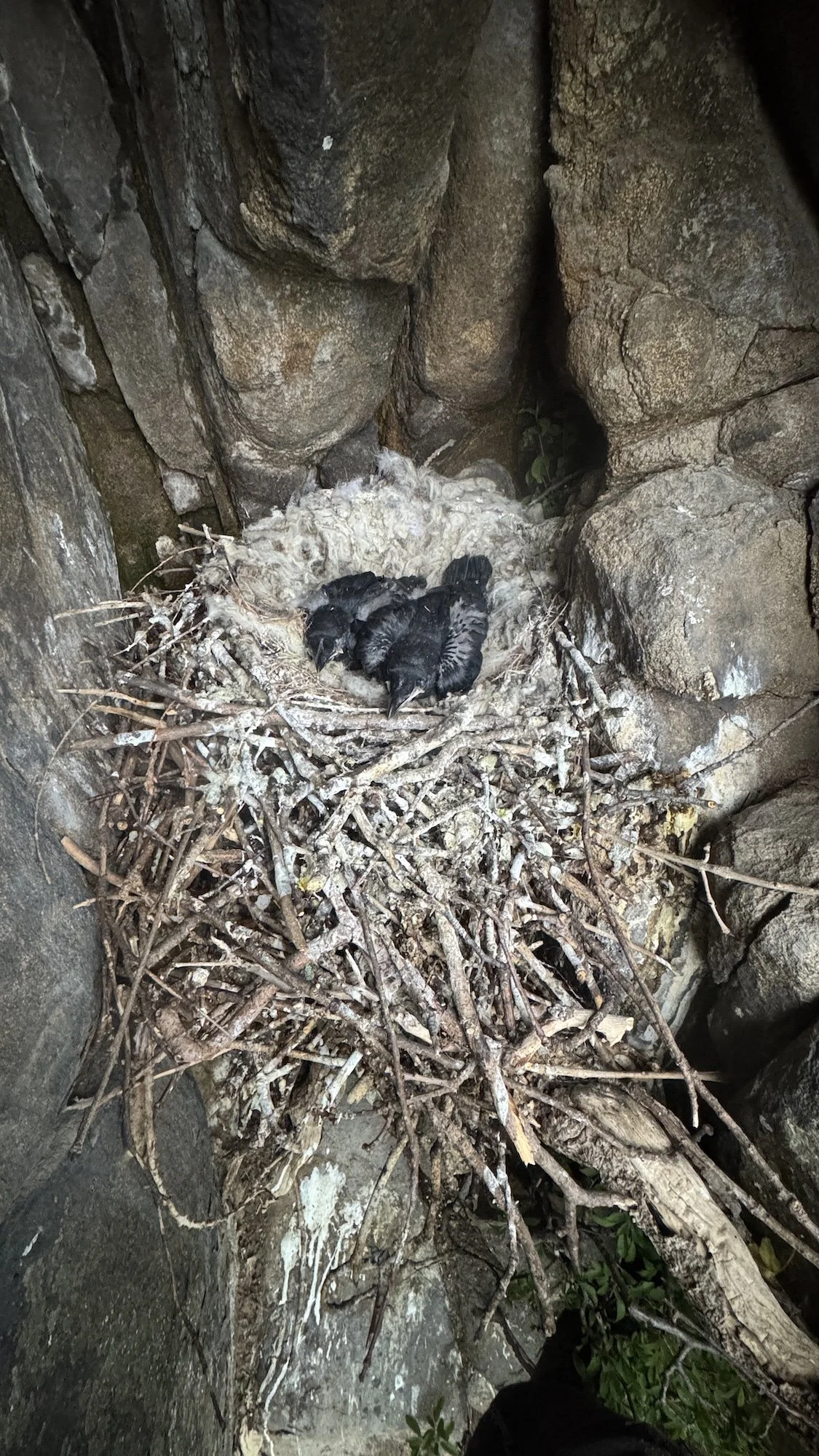
Raven nest on 30m cliff - check out the nest insulation!
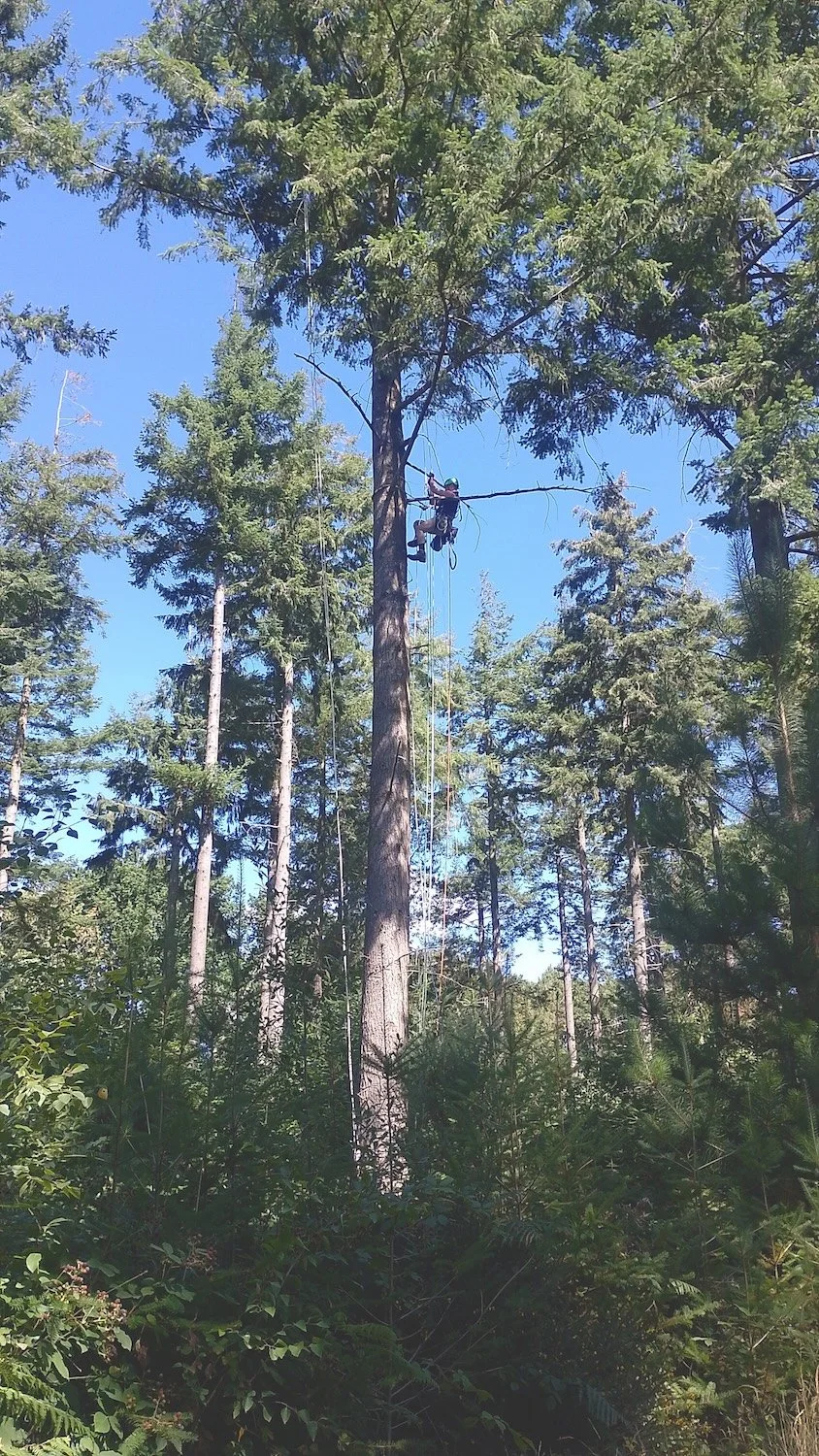
Accessing a raptor nest in a towering Douglas Fir tree.
Some of the jobs involved accessing 30-40m trees with one nest way up at 28m (see above). Working at height in environments where Schedule 1 raptors are present introduces a unique combination of risks—both to our climbers and to the protected wildlife being monitored. Safety measures like 2-way radios and bomber anchor systems are invaluable, keeping working systems friction-free and smooth for the climbers and site crew alike. Remote sites present unique access challenges where anchor placements and rigging often involves thinking ‘outside the box’. Temporary anchor systems like steel pins or passive devices minimise our environmental impact with edge protection deployed where appropriate to protect both our safety rope systems, and the fragile ecosystems beneath.
“Working at height in environments where Schedule 1 raptors are present introduces a unique combination of risks—both to our climbers and to the protected wildlife being monitored. ”
Overall, it has been a highly successful year and very rewarding too. We have worked across the sector at both small and large scales. In the end, it is all about the teamwork. Working as team is both rewarding and makes solving challenges more fun. It is also safety critical knowing that you can reply on each other, working in complex environments. For every person abseiling into the void, there is an operative keeping an eye on anchor systems and comms - you are only as strong as your team!
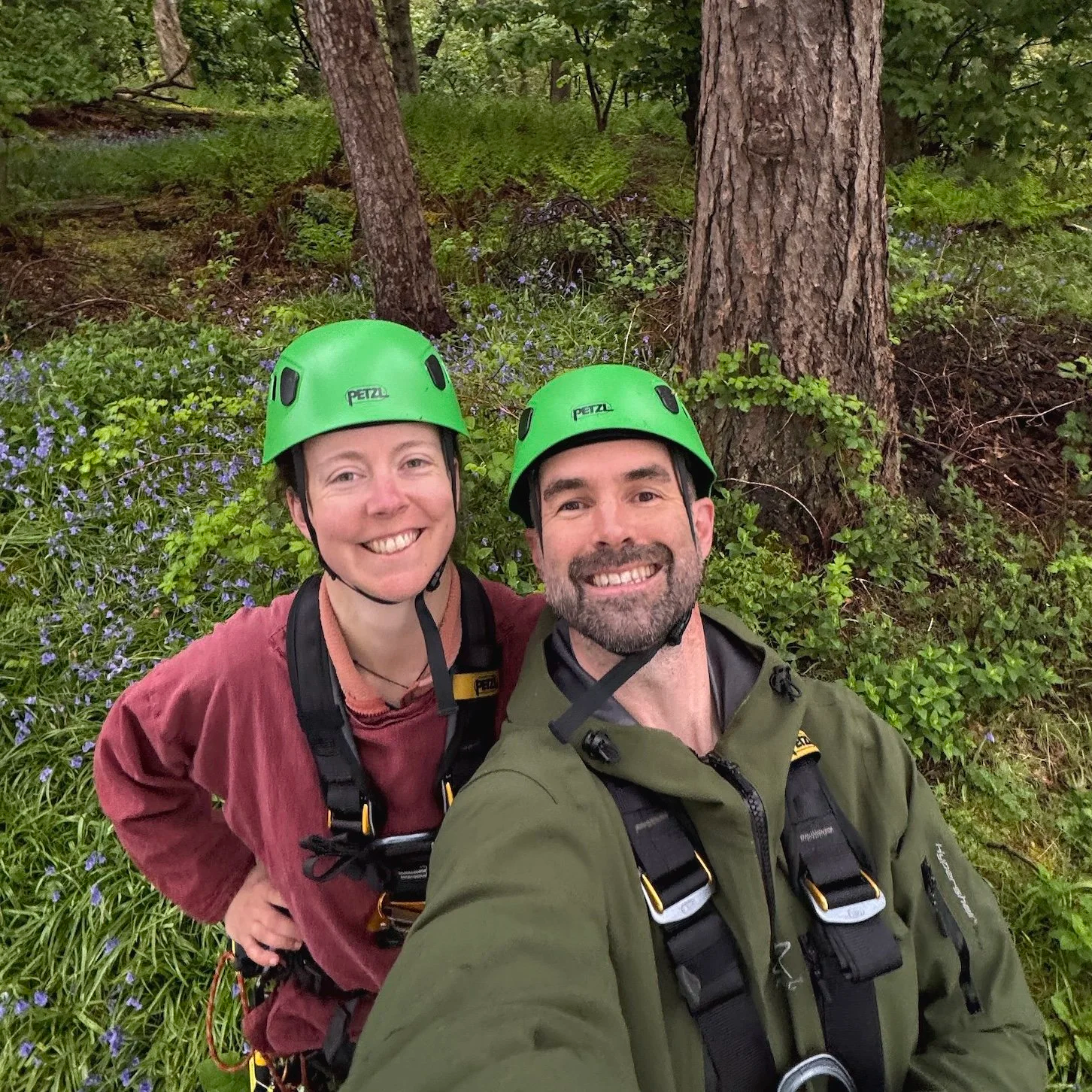
Sophie and Tim, Raven Rope Access team
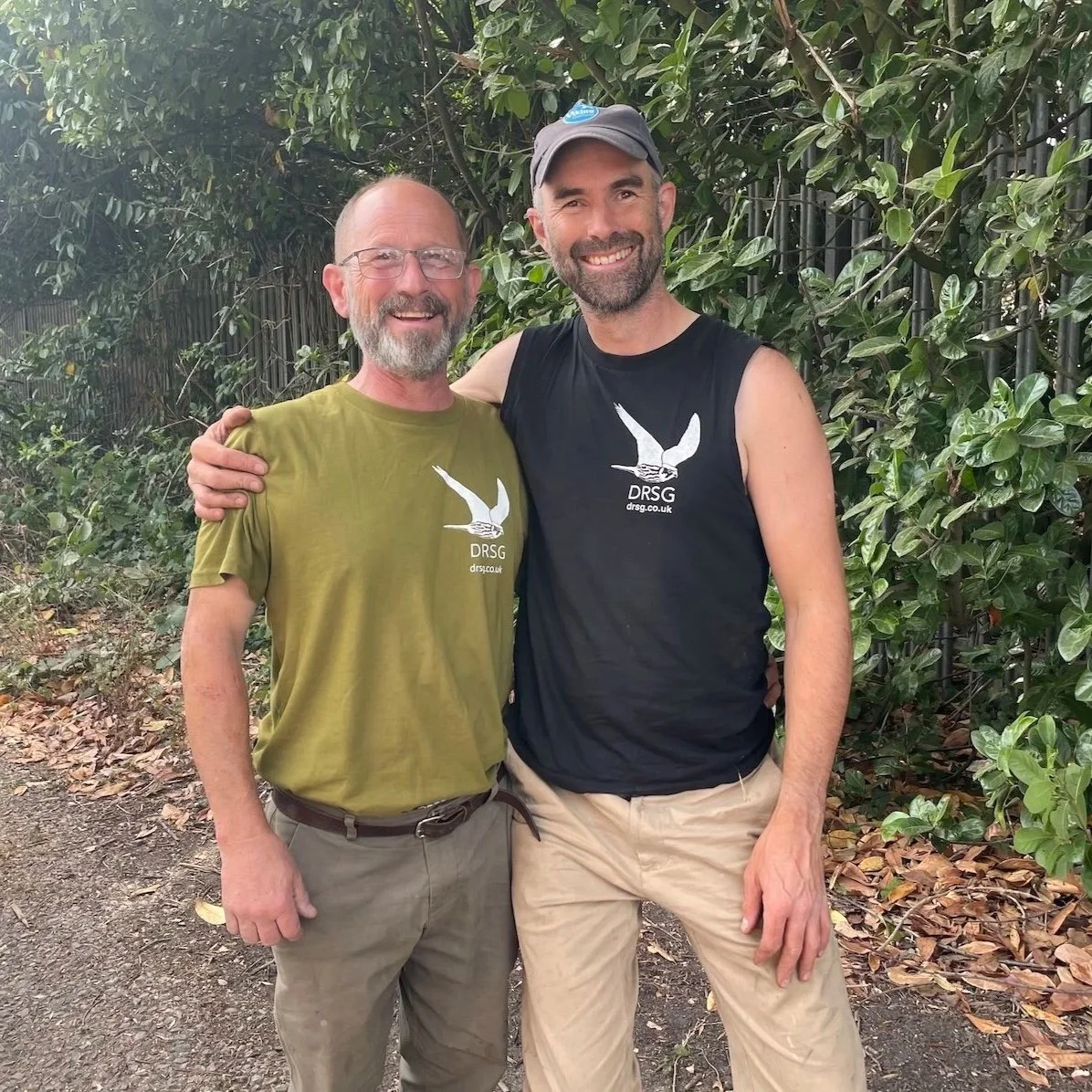
Jason and Tim, Dorset Raptor Study Group
