
Ever wondered about a career on the ropes, been intrigued at those with a head for heights, or marvelled at the web of ropes and rigging? We specialise in providing safety at height solutions for working with Schedule 1 raptors and TV. Alongside action shots of projects requiring technical access across the UK, we look at what’s all involved behind the scenes.
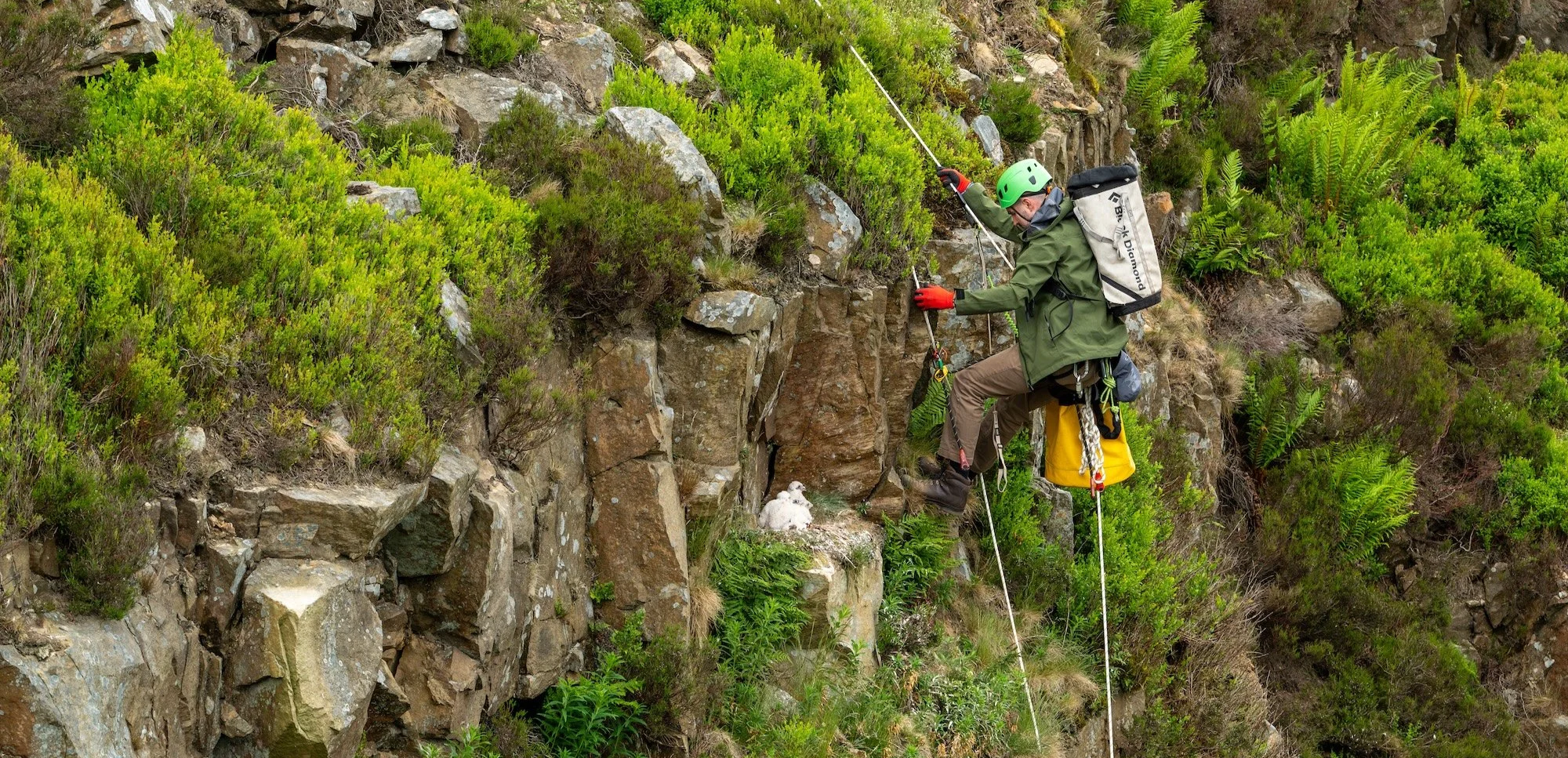
Rope access for Peregrine monitoring © Mark Harder
Rope Access allows us to work safely in complex environments otherwise out of reach. Summer always brings a fabulous mix of working alongside people and rare wildlife on special conservation projects.
Working at height in environments where Schedule 1 raptors are present introduces a unique combination of risks—both to our climbers and to the protected wildlife being monitored. Rare, iconic species living in our landscapes such as Peregrine falcon, Osprey, Hobby, White-tailed eagle, are legally protected, particularly during the breeding season. Working with them means that effective safety solutions have to integrate working-at-height best practice with a sensitivity to wildlife alongside compliance with wildlife protection law.
Part of monitoring these rare birds involves visiting their nests to take measurements and fit unique BTO rings. All this data feeds into the vast databank that helps inform science for ongoing and future conservation projects. Birds of prey choose to nest on shear cliff faces or 10-30m up in a variety of tree species. These isolated locations, ideal for protecting their young, present us with some interesting access challenges.
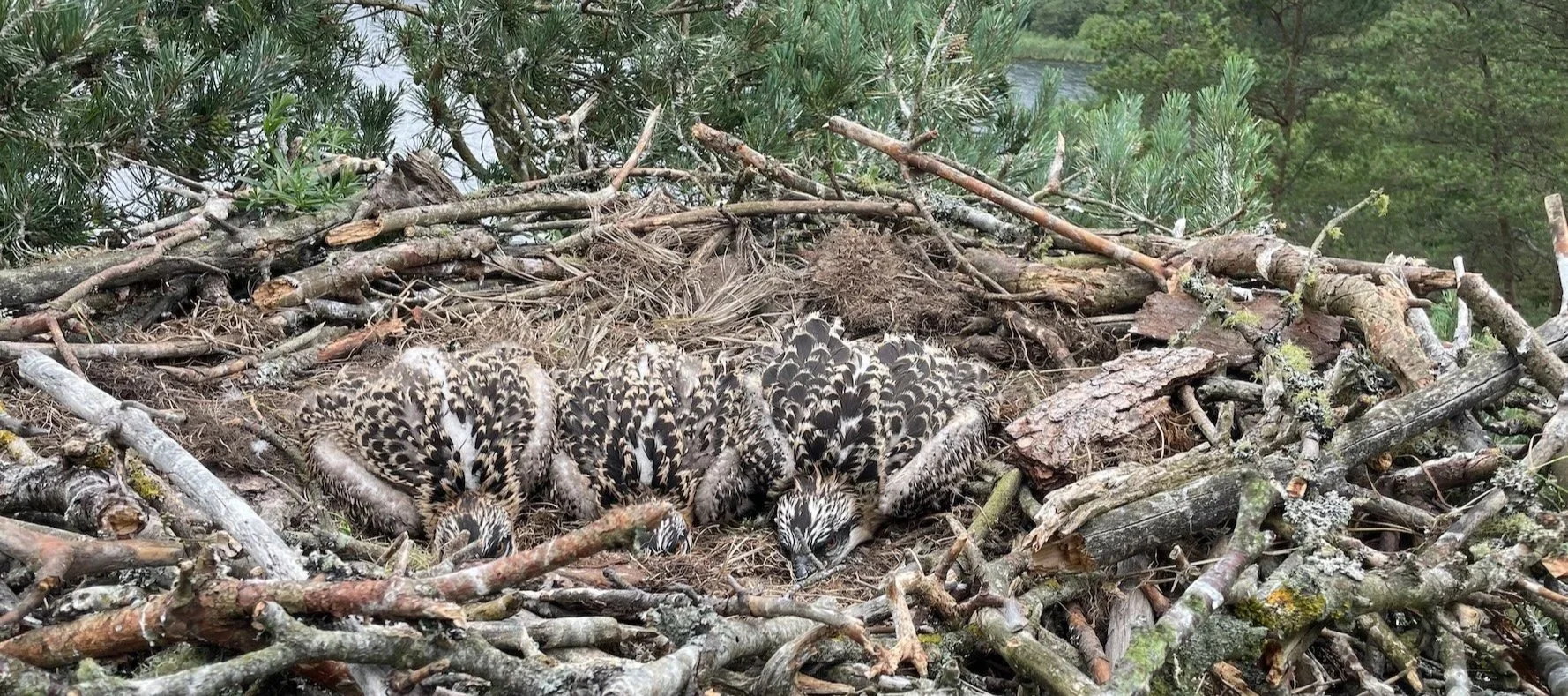
Osprey nest monitoring on the top (!) of a Scots pine tree.
Risk Factors for working at height near raptor nesting or activity zones include the obvious fall hazards from height as well as falling objects from cliffs and trees, human structures and loose substrate. On cliffs and steep ground, a big hazard is sharp or unstable rocks as these and textile ropes do not mix and this is where Rope Protection comes in. There are always access challenges of remote sites where anchor placements and rigging often involves thinking ‘outside the box’. And don’t forget our very British weather - environmental exposure is something you always have to be aware of when you are making safety-critical decisions.
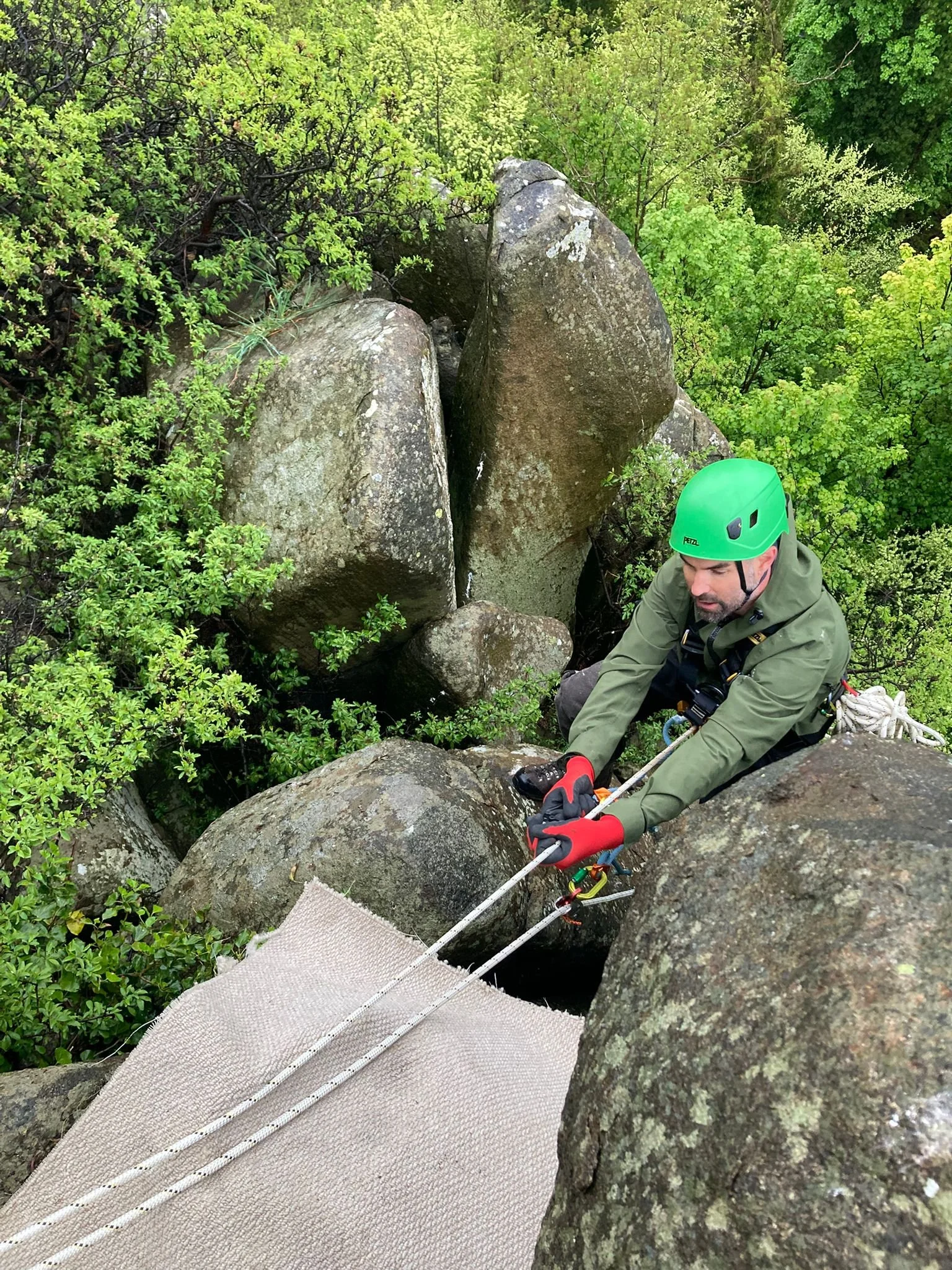
Rope & SSSI habitat protection with the ‘flying carpet’.
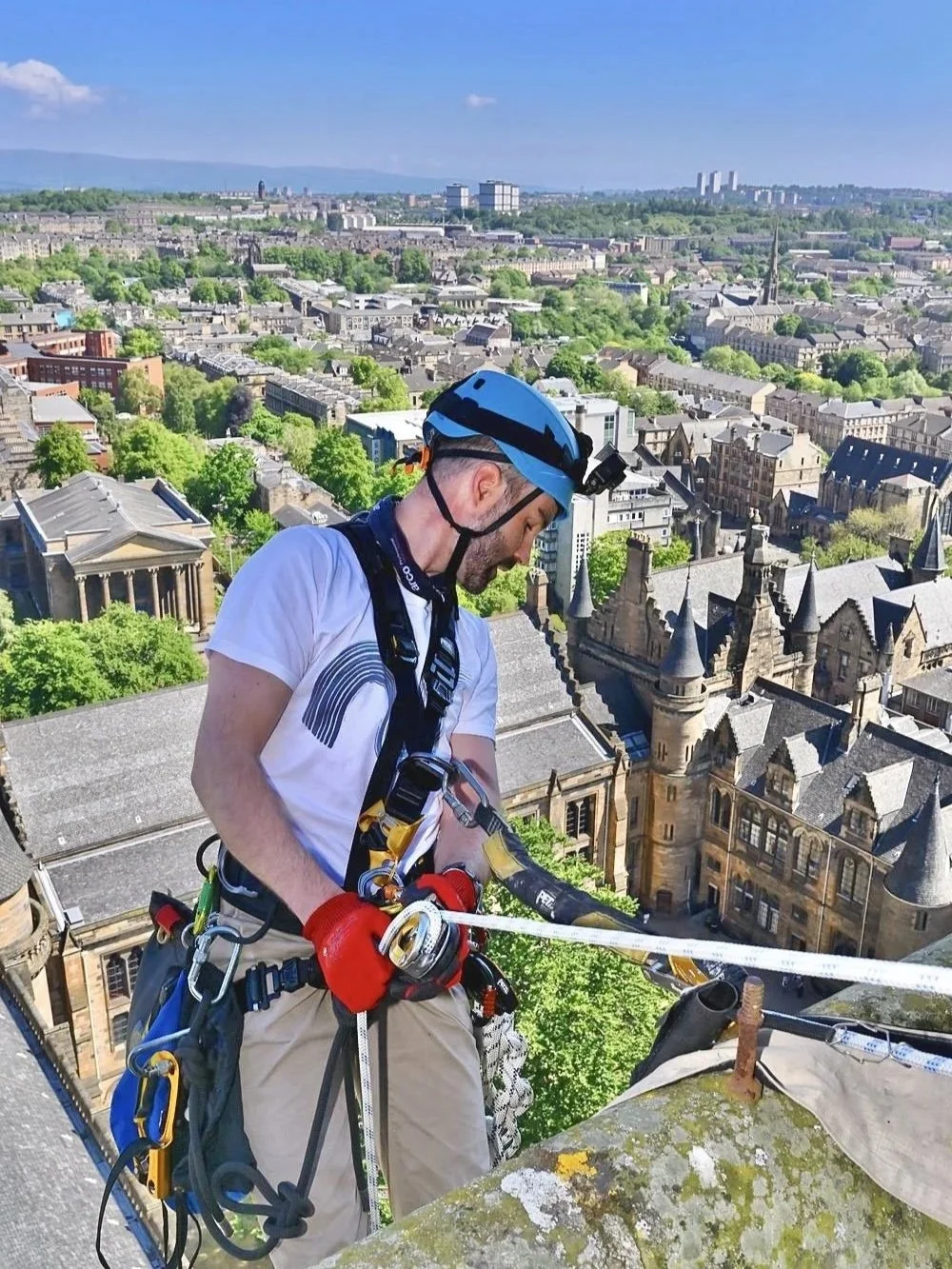
Rope edge protection from Rope Access Equipment.
Weather also affects the birds great care is needed to ensure their welfare is fully included. Bad weather is not good for birds or climbing so that can be a bonus! In general, we take great care to avoid disturbance at critical times, ensuring the young are at the correct age for visiting, taking advantage of their natural instinct to sit tight.
“The chicks were then returned to the nest and everyone then retired from the tower. Bonnie went straight back into the nest. It couldn’t have gone any better.”
Previously mentioned legal and environmental considerations mean that Schedule 1 raptors are protected under legislation such as the Wildlife and Countryside Act 1981 (UK). It is an offence to disturb birds at or near the nest or obstruct breeding activity. We use our specialist knowledge and only carry out work under appropriate licences from the relevant statutory bodies (e.g., BTO, NatureScot, Natural England) in consultation with ecologists or ornithologists on the ground within defined exclusion zones and seasonal restrictions. Wildlife-Sensitive Controls include pre-work surveys by qualified ecologists, established buffer zones around active nests, use of observers to monitor bird behaviour during operations with stop-work protocols if birds show signs of distress.

Seasonal working restrictions at RSPB Loch Garten Osprey with camera maintenance outwith the breeding season.
Work at Height regulations stipulate careful planning for all eventualities such as Emergency Action Plans, fully comprehensive Risk Assessments and Method Statements (RAMS), site visits, tree inspections, and more - there can be a lot of prep work involved! Each location and its site specifics dictates the access methods used. For abseiling down the 80m University of Glasgow tower we use rope access techniques honed through regular IRATA training. For an Osprey we use a quite different skillset with specialist tree climbing and rigging. And for certain sites, the safest option may be to consider a MEWP (Mobile Elevating Work Platforms) for more controlled environments.
Our safety kit consists of a wide variety of PFPE (Personal Fall Protection Equipment) used in Fall Arrest configurations, with full-body harnesses, lanyards and secondary lines fitted with a back-up device. Temporary anchor systems like steel pins or passive devices minimise environmental impact and as mentioned earlier, we use edge protection where appropriate. Fall Arrest lines keep the climbers safe and Work Restraint lines may be set to allow access to a point at or near the cliff edge, but not beyond, to facilitate comms and bird handling by additional personnel.
Tree Climbers and Rope Access Technicians are trained in advanced working at height skills (e.g., IRATA, C&G, depending on method), First Aid, Tree Inspection, Kit Inspection (including LOLER inspections), environmental awareness, Risk Assessments and rescue plans. Part of this includes training for emergency rescue at height which is critical in remote locations.
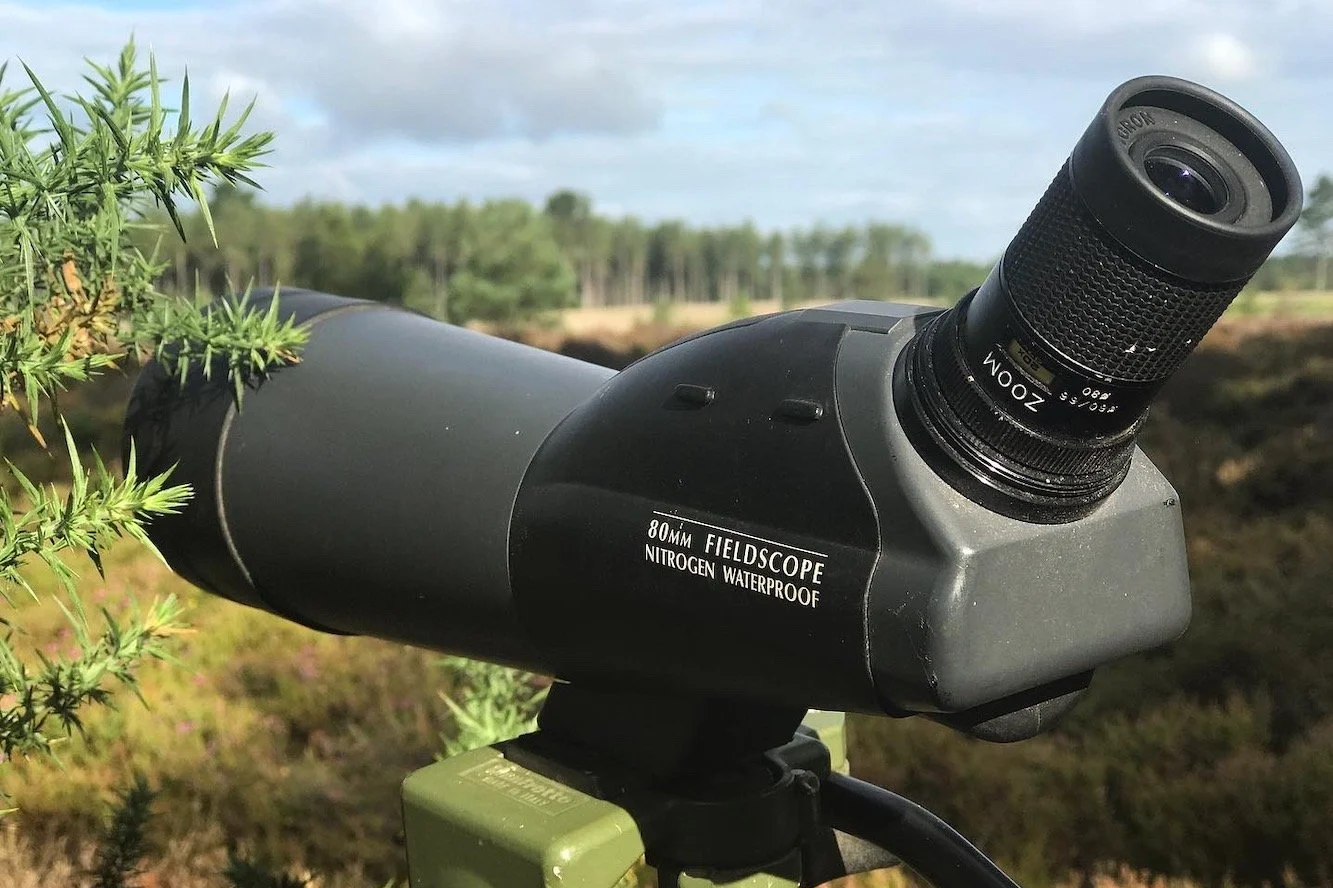
Assessing the birds and site is a key part of the plan.
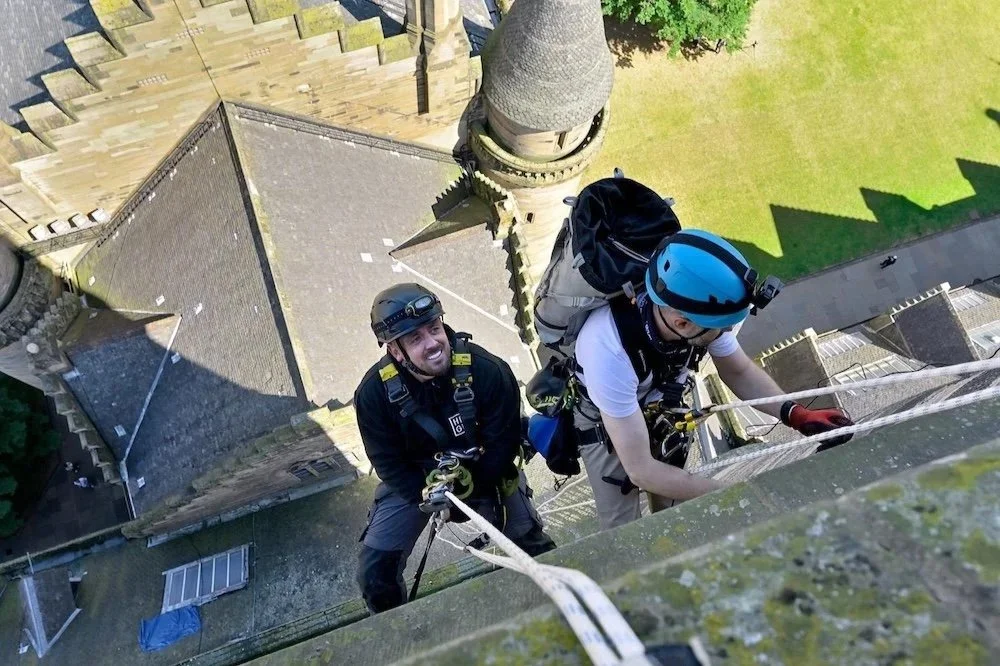
Working in a team with HEIGHT © Laurie Campbell
Providing safety at height solutions in areas inhabited by Schedule 1 raptors requires a carefully controlled, multidisciplinary approach. Our Best Practice approach balances climber safety and the safety of the rest of the team, legal compliance, and protection of raptors and habitats, including designated sites (e.g., SSSI, NNR) with collaboration between safety professionals, ecologists and site managers. By combining robust access systems, strict environmental controls, and specialist training, organisations can ensure safe operations while fully protecting vulnerable bird species.
“All of us on the Glasgow Peregrine Project team are indebted to Tim for all his efforts.”
